

A roadshow looks flawless on the calendar until one handoff fails. The principal lands late, the pickup line at the terminal is crowded, the driver can't adjust the route fast enough, and a board presentation starts with your executive walking in irritated and exposed. That's usually the moment corporate travel teams stop treating ground transport as a commodity.
Standard ride-hailing works for routine airport runs. It doesn't work well when the traveler is high-profile, the itinerary spans multiple cities, or the day includes private terminals, investor meetings, security considerations, and changes that happen in real time. In those situations, the driver matters less than the operating system behind the driver. You need dispatch discipline, discreet communications, backup coverage, and chauffeurs who understand when silence is part of the service.
This guide approaches VIP transport reviews the way an executive assistant or travel manager would. Not by marketing language, but by a standardized 7-point scorecard: Punctuality, Discretion, Fleet, Safety, Concierge, Coverage, and Pricing. That framework makes it easier to compare providers that serve similar travelers in very different ways, from tightly managed white-glove operators to broad global booking platforms.
One point before the list. The wider VIP travel management solutions market is projected to reach USD 62.9B in 2026 and USD 113.9B by 2034, at a projected 7.7% CAGR, according to Research and Markets' VIP travel management solutions outlook. For buyers, that matters because growth usually increases complexity before it improves consistency. The best provider for a principal in New York may not be the best one for the same principal in Dubai two days later unless the operator has real orchestration depth.
1. MLR Worldwide Service
A principal lands at Teterboro, the meeting start moves up by 40 minutes, and the security detail asks for a revised pickup point while the aircraft is still taxiing. That kind of day tests the operator, not just the chauffeur. MLR Worldwide Service stands out in this review because its model is built for schedule pressure, private aviation coordination, and multi-stop programs where one missed handoff can affect the rest of the itinerary.
Its operating structure is the main reason it leads this analysis. MLR centers the service around concierge-managed bookings, 24/7 dispatch oversight, and affiliate coordination across major business markets. For executive assistants and corporate travel teams, that usually matters more than consumer app polish. The practical benefit is fewer moving parts for the traveler and tighter control for the person managing the trip.
On the 7-point scorecard, MLR performs strongest in Punctuality, Discretion, Concierge, and Coverage. That assessment comes from service design rather than review volume. Flight tracking, FBO coordination, support for changing schedules, and centralized oversight are all indicators of a provider built for volatile itineraries. In VIP transport, reliability under pressure carries more weight than broad public visibility, which is why MLR places first in this comparison.
Discretion also appears to be built into the operating process, not added as marketing language. The company highlights secure VIP movements, route planning, and coordination with protection teams. For buyers managing public figures, board members, or family office principals, those details matter because they reduce the need to bolt security requirements onto a standard booking after the fact.
A useful rule applies here. If the traveler uses private terminals, travels with security, or changes plans mid-route, judge the provider by the quality of its operations desk first.
Fleet depth looks targeted rather than oversized. Executive sedans, premium SUVs, luxury vans, and specialty vehicles cover the needs that come up most often in corporate and private aviation work. That mix is well suited to airport-to-meeting transfers, small entourages, and roadshow schedules. It is less useful for buyers who want instant online pricing, since quotes are specific to the trip and may require an extra procurement step.
Regional fit also matters. In New York, MLR is well aligned with dense multi-stop days, private aviation arrivals, and traffic-sensitive scheduling where dispatch discipline is often more important than vehicle selection. In London, the value is consistency across airport, hotel, and meeting movements where timing windows can be tight and access rules can shift. In Dubai, the bigger consideration is whether the operator can maintain the same communication standard and discretion level that a traveler received in the U.S. or Europe. That cross-market consistency is often where weaker global networks start to show gaps.
For buyers assessing service style, MLR's own view of executive private car service standards for high-control itineraries aligns with what this scorecard rewards: operational discipline, clear communication, and consistent execution across regions.
- Best for: Executive assistants, corporate travel teams, private aviation support, and high-profile travelers who need centralized control
- Main tradeoff: No published pricing, so internal approvals may take longer than they would with platform-style providers
2. Carey International
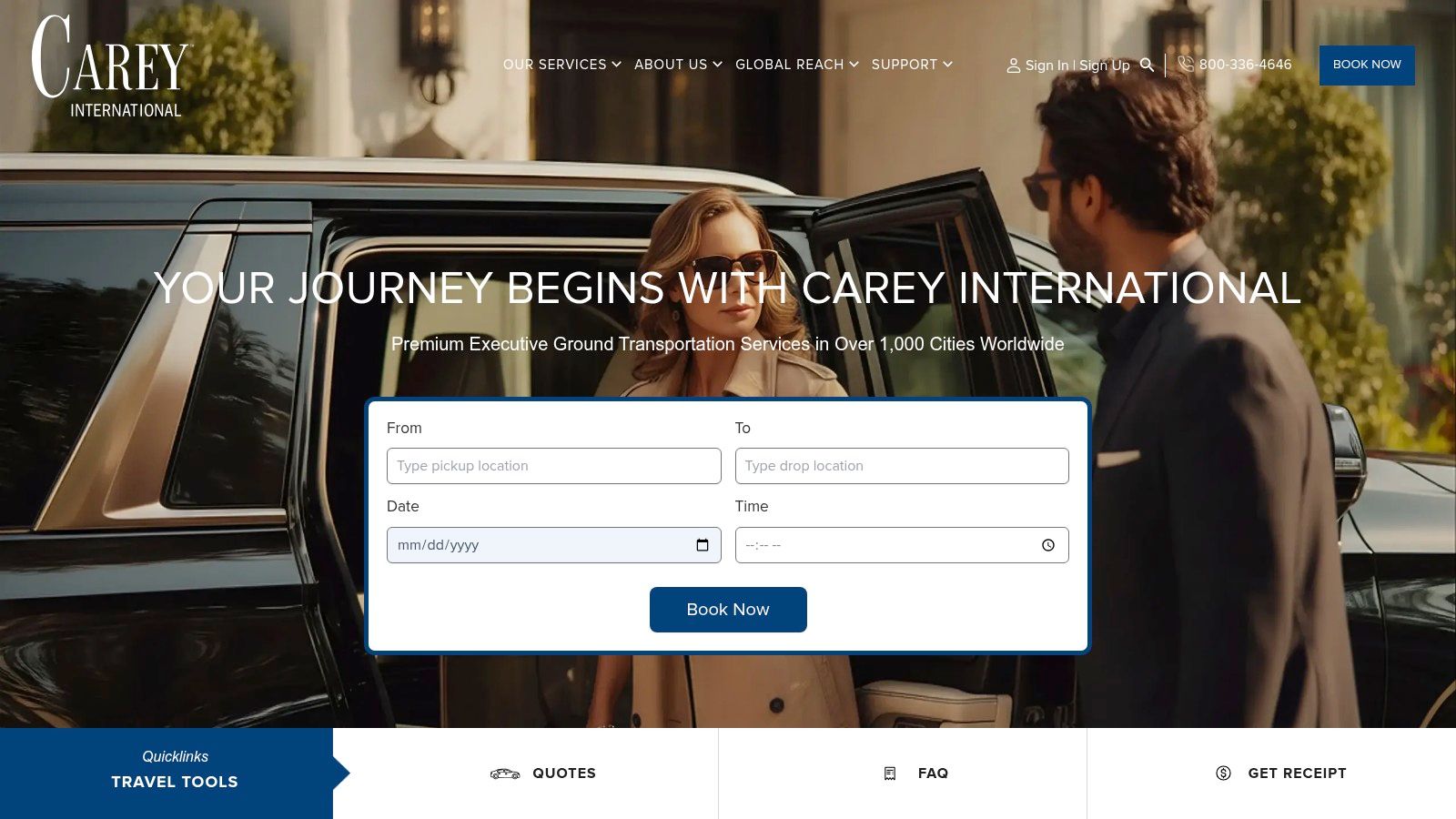
Carey is the classic choice for buyers who want a globally recognized chauffeured network and one booking relationship across many cities. Its appeal isn't novelty. It's administrative simplicity. For managed travel programs, that often matters more than finding the absolute best local operator in each market.
The company serves more than 1,000 cities through its network, according to Carey International. That breadth makes Carey especially useful for multinational firms that need repeatable service standards, centralized support, and hourly as-directed service for itineraries that won't stay fixed for long.
Where Carey usually performs best
Carey tends to be a strong option for roadshows, investor meetings, event movements, and private aviation-linked transfers where one vendor relationship reduces friction. Executive assistants often prefer providers like this because the booking workflow is easier to standardize internally. A consistent portal, one billing relationship, and 24/7 support can save more time than squeezing out a small fare difference.
There's also value in the as-directed structure. For a principal with three meetings in Manhattan, one media stop, and an uncertain return time, hourly service is usually safer than piecing together separate transfers. If you're weighing fixed transfer providers against hourly chauffeur programs, MLR's overview of executive private car service options for business travel is a useful companion read.
In VIP transport reviews, global consistency often beats local brilliance. A slightly less distinctive ride is better than a perfect first leg and a chaotic second one.
Scorecard view
Carey scores well on Coverage, Concierge, and Punctuality. Fleet and Discretion are generally positioned at a corporate-executive level rather than ultra-bespoke luxury. Pricing is usually on the premium side, which is the cost of buying operational reach and brand familiarity.
- Best for: Global corporate programs and multi-city itineraries under one account
- Watch for: Service can feel more standardized than personalized in some cities
- Practical buyer note: For EAs managing recurring executive travel, Carey often works best as a default program vendor rather than a one-off splurge booking
3. EmpireCLS Worldwide Chauffeured Services
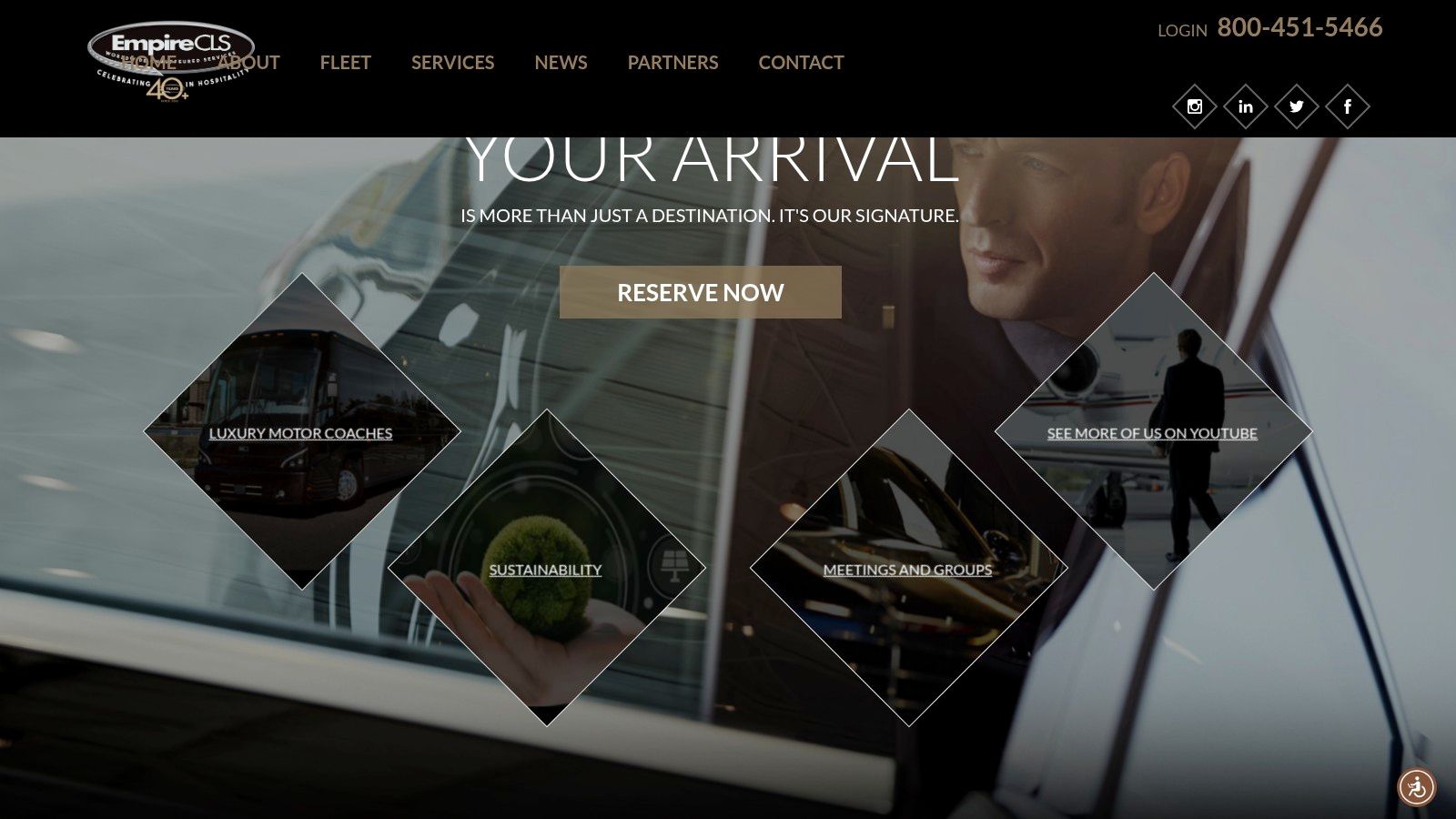
EmpireCLS is one of the more interesting names on this list because it leans into a hospitality model, not just transport mechanics. For buyers, that distinction matters. A polished pickup is easy to promise. Delivering calm, polished service across a tense schedule is much harder.
The company is known for an employee-chauffeur approach in key hubs and for detailed operating standards, which often signals tighter control over service behavior than affiliate-only models. That tends to matter most for entertainment clients, public figures, and principals whose expectations around presence, tone, and discretion are high.
Why executive teams choose EmpireCLS
EmpireCLS is usually a fit when the traveler experience itself is part of the assignment. Entertainment movements, client-facing arrivals, and VIP programs around events all benefit from a service culture that feels polished rather than merely efficient. The employee-chauffeur structure can also reduce variability where the company controls the ride directly.
That said, this is not the low-friction budget pick. It sits in the premium lane and should be judged against other top-tier chauffeur operators, not against app-based alternatives. If you're trying to align white-glove expectations with chauffeur conduct, MLR's write-up on private chauffeur services for executive and VIP travel helps frame what to look for.
Scorecard view
EmpireCLS tends to rate strongly in Discretion, Fleet, and Concierge. Coverage is solid through affiliates, though that naturally introduces some city-by-city variation. Pricing is premium, but buyers who value presentation and protocol usually accept that trade.
A useful way to think about EmpireCLS is this: it's less about broadest reach and more about maintaining a certain service posture. If your principal notices whether the chauffeur reads the room, handles arrivals gracefully, and communicates with restraint, EmpireCLS belongs on the shortlist.
- Best for: VIP movements, entertainment, event-related executive travel
- Main advantage: Strong alignment between chauffeur conduct and high-touch hospitality
- Potential drawback: Less compelling if your top priority is transparent self-service booking
4. Dav El | BostonCoach
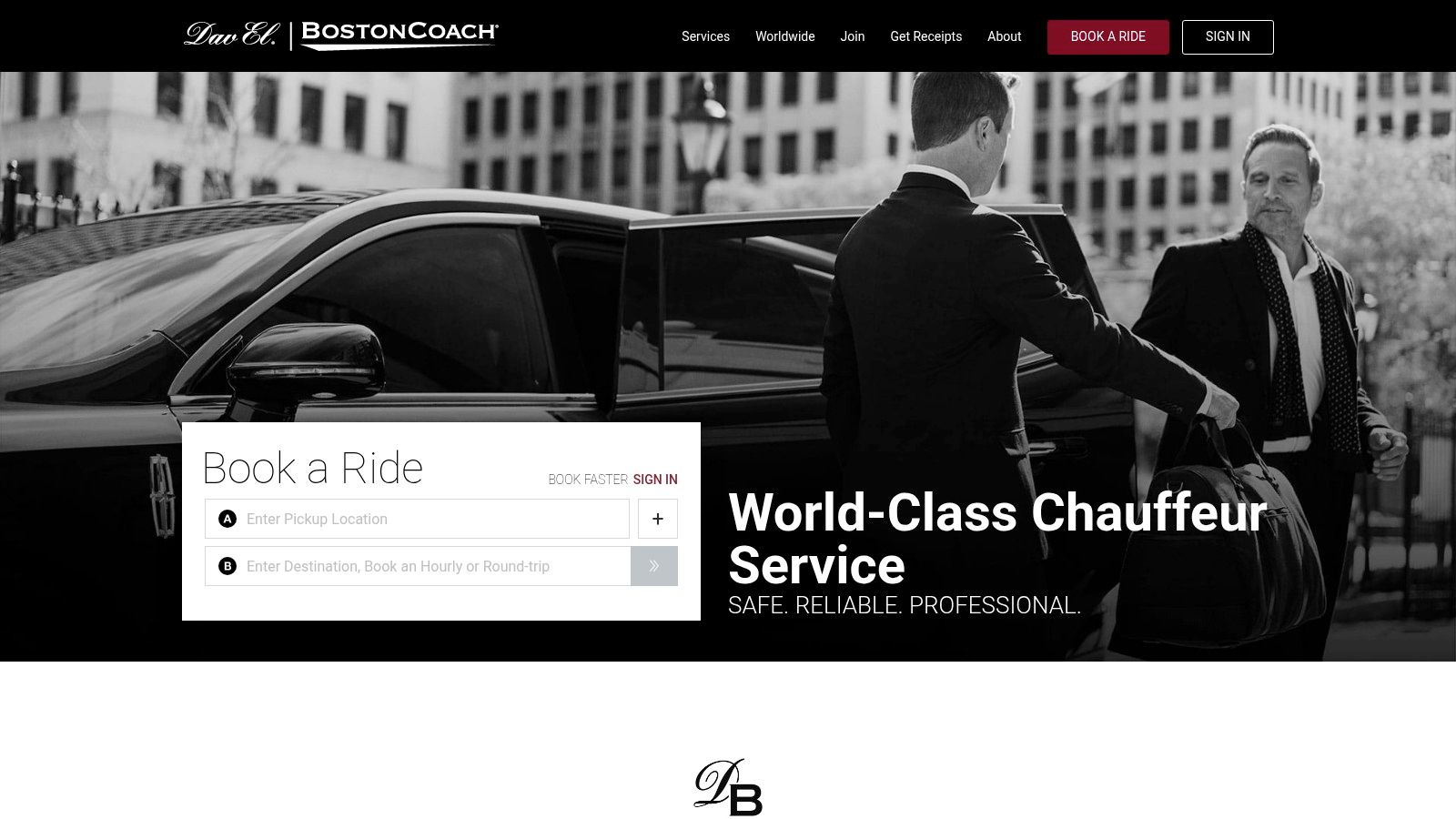
Dav El | BostonCoach is the enterprise operator on this list. If your transportation needs extend beyond one executive and into conference moves, shuttle plans, recurring corporate travel, or large event programs, it deserves serious attention. In these scenarios, mature workflows can matter more than luxury cues.
Its value is breadth of service classes and operational process. Point-to-point transfers, hourly bookings, event shuttles, and higher-volume logistics under one roof can simplify life for procurement and travel operations teams. For a company with both board travel and annual meetings, that kind of consolidation is attractive.
Enterprise strengths
BostonCoach is often most useful when the travel department wants standardization. Web, app, and phone booking options support different traveler preferences, while the broader platform can accommodate individual VIP rides and larger event demands. Buyers don't have to maintain one provider for executives and another for conference operations unless they want to.
That doesn't automatically mean the ride feels more exclusive. Dav El | BostonCoach is stronger as a programmatic vendor than as an ultra-bespoke luxury specialist. In other words, it's often chosen because it can handle a transportation portfolio, not just a principal.
Buyer lens: If your transport spend touches travelers, speakers, shuttles, and event staff, the right provider is often the one with the best operational discipline, not the most luxurious sedan category.
Scorecard view
Dav El | BostonCoach scores well on Coverage, Fleet, and Concierge, particularly for managed corporate programs. Pricing varies by service type, but this isn't usually the cheapest route. Punctuality and service feel can vary by market, which is typical for large networks.
- Best for: Corporate travel managers handling a mix of executive and event transportation
- Main strength: One provider can support multiple use cases without splitting workflows
- Tradeoff: The experience may feel more corporate than personalized
5. Savoya
Savoya is the security-first pick. If your principal is high-profile, your company has a formal risk posture, or your EA team wants tighter visibility into every trip, Savoya stands out because its messaging and product design are built around control, vetting, and communication discipline.
The company says it accepts fewer than 2% of driver applicants and serves more than 350 service areas through a large chauffeur network at Savoya. Those figures matter less as bragging rights than as a signal of operating philosophy. Savoya is telling buyers that risk management sits at the center of its service model, not on the edge of it.
Why security-focused teams rate it highly
For executive assistants, one of Savoya's biggest advantages is visibility. Teams that manage sensitive principals usually want proactive status updates, clear accountability, and fast exception handling. Savoya's positioning lines up directly with that need. It isn't selling a glamorous ride. It's selling confidence in the chain of custody around the trip.
That makes it especially appealing for U.S. business hubs, board travel, and executives whose movements require more than a simple curbside pickup. It can also work well for firms where legal, corporate security, or family office staff want a documented process around vetting and trip oversight.
Scorecard view
Savoya scores especially high on Safety, Discretion, and Punctuality. Concierge also rates well because communication is part of the product, not just a customer service add-on. Coverage is curated rather than universal, so advance booking matters more outside major hubs.
- Best for: Security-minded executive travel programs
- What sets it apart: Strong emphasis on vetting, trip monitoring, and EA-facing communication
- Tradeoff: Premium positioning and less appeal for travelers who just want the fastest inexpensive booking flow
6. Blacklane
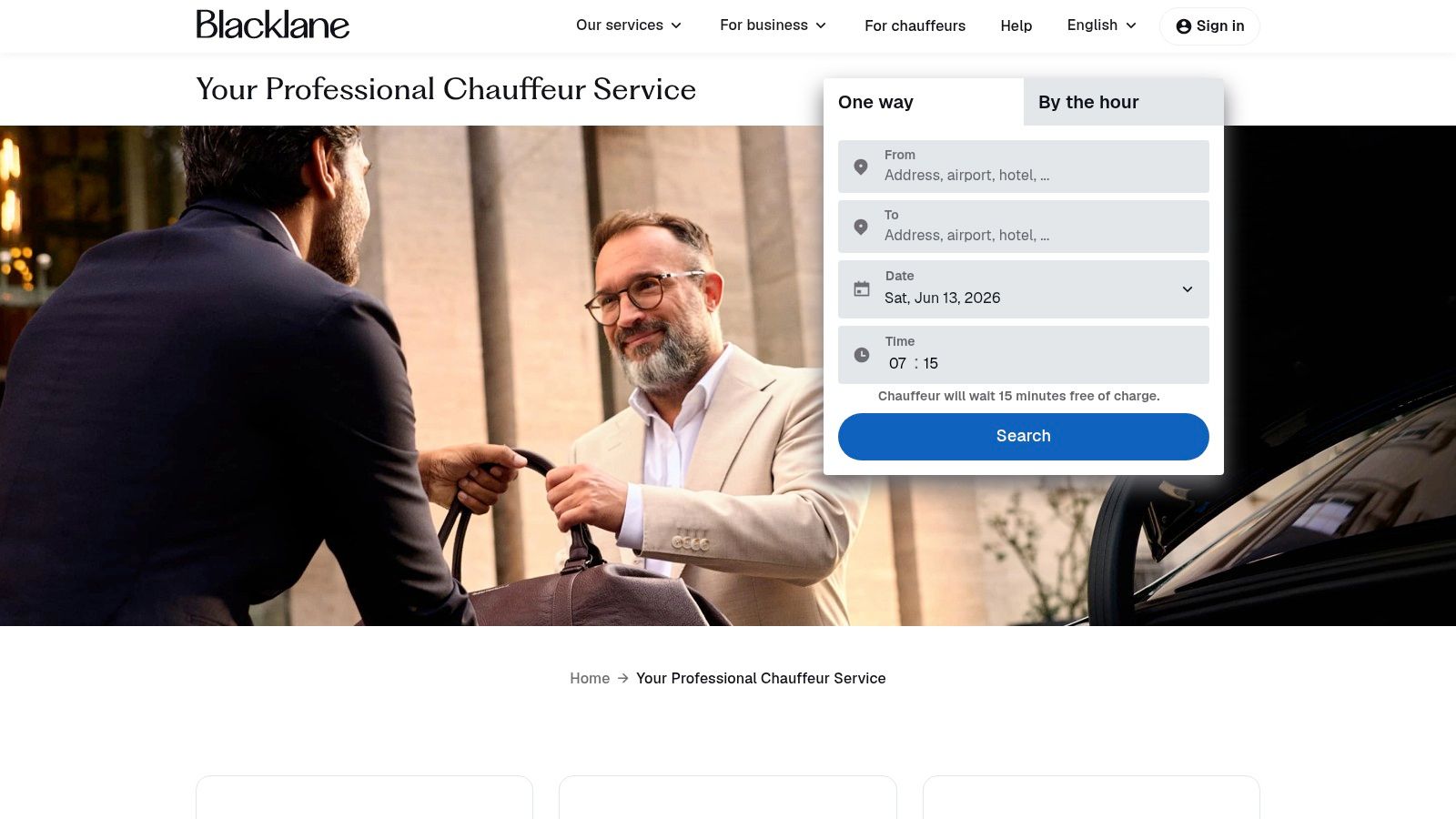
Blacklane is the most practical option on this list for travelers who want global chauffeur booking with transparent, upfront fares. It's not the most bespoke. It is often the easiest to book quickly across countries without reinventing the process each time.
That distinction matters in VIP transport reviews because not every VIP trip needs a full concierge desk. Sometimes the assignment involves securing a predictable airport transfer in an unfamiliar city with a defined service class and fixed fare. Blacklane does that well through its marketplace approach and standardized booking flow at Blacklane chauffeur service.
Where Blacklane shines
Blacklane is a strong fit for cost-conscious premium travel. An EA can often book faster because pricing is shown before checkout, airport pickup inclusions are clearer, and the app experience reduces back-and-forth. For travelers who move across several countries in a short period, one familiar interface can lower errors and save time.
The tradeoff is structural. Blacklane doesn't own the local fleets. It connects travelers to local partners. That creates convenience and broad access, but it can also create more ride-to-ride variability than tightly controlled operators with direct chauffeur management.
Scorecard view
Blacklane rates strongly on Pricing, Coverage, and ease of booking. Discretion and Fleet are usually adequate for executive travel, though not always as polished as premium specialist operators. Concierge is lighter-touch by design, which some buyers will view as efficient and others as insufficient.
A useful dividing line is this: if your traveler needs operational handholding, choose a concierge-led provider. If your traveler needs a premium ride with visible pricing in multiple countries, Blacklane is one of the cleanest solutions.
- Best for: Multi-country travelers who prioritize speed, convenience, and fare clarity
- Main advantage: Fixed upfront pricing helps with approvals and expense predictability
- Main caution: Service quality depends on local partners, so consistency can be less uniform
7. Commonwealth Worldwide Executive Transportation
Commonwealth is the specialist many corporate teams appreciate once they've had to manage difficult Northeast itineraries. The company has a long association with executive transport in the New York and Boston corridor, plus global affiliate support for international work. That makes it especially attractive for financial roadshows and private aviation-linked schedules that need close coordination.
Its positioning is practical rather than flashy. Buyers who work in regulated, high-pressure, time-sensitive environments often prefer that. The promise here is experience, training, and operational maturity.
Why it deserves a place on the shortlist
Commonwealth is often strongest when the schedule has little margin for error and the geography is dense. New York and Boston reward operators who understand airport realities, city congestion, meeting turnover, and the rhythm of financial and corporate travel. A provider can have beautiful vehicles and still fail if dispatch timing and chauffeur judgment are weak.
The company also benefits from longevity. It describes more than 40 years of experience and service in 85+ countries through its network at Commonwealth Worldwide Executive Transportation. For buyers, that combination usually signals a provider that understands both local depth and international coordination.
Scorecard view
Commonwealth scores well on Punctuality, Discretion, and Coverage for executive programs centered on the Northeast and major business hubs. Concierge strength is also notable for roadshow-style work. Pricing sits in the professional executive tier, not the commodity lane.
- Best for: NYC and Boston corridors, financial roadshows, private aviation support
- Why buyers like it: Strong alignment with complex corporate itineraries rather than casual luxury
- Limitation: Its global brand footprint is less dominant than the largest international names
VIP Transport: Top 7 Service Comparison
A missed pickup for a board member in Midtown, a delayed airside transfer at Teterboro, or a name-board greeting that exposes a private principal can all turn a routine ground booking into an operational problem. That is why this comparison uses a consistent 7-point scorecard instead of broad luxury claims. The criteria are Punctuality, Discretion, Fleet, Safety, Concierge, Coverage, and Pricing.
The table below is designed for buyers who need a practical shortlist, not a marketing summary. It also helps clarify regional fit. A provider that performs well in NYC may rely more heavily on affiliates in Dubai or outer London, which can affect consistency.
| Service | 7-point scorecard profile | Operational load | Expected outcomes | Ideal use cases | Key strengths |
|---|---|---|---|---|---|
| MLR Worldwide Service | Strong in Discretion, Concierge, and private aviation coordination. Coverage depends on affiliate depth by city. | High. Bespoke bookings, FBO coordination, and closer trip oversight. | High-touch executive transport with good trip control. Local consistency should be verified market by market. | Executive travel, private aviation crew transfers, multi-stop roadshows | Concierge-led booking, FBO support, vetted affiliate model |
| Carey International | Strong in Coverage, process consistency, and corporate booking standardization. | Moderate to high. Centralized setup is straightforward, but enterprise programs need account structure and policy alignment. | Reliable multi-city execution with predictable service rules. Premium pricing is common. | Corporate roadshows, hourly executive itineraries, events | Broad international reach, standardized service framework |
| EmpireCLS Worldwide | Strong in Punctuality, Discretion, and controlled service delivery in core hubs. | Moderate. Defined service policies reduce booking ambiguity. | High-touch VIP service with tighter operational control in primary markets. Public review volume is thinner than some peers. | VIP and entertainment movements, high-touch corporate transfers | Employee chauffeur model, owned-asset consistency in key cities |
| Dav El | BostonCoach | Strong in Fleet breadth, group logistics, and managed travel support. | Moderate. Digital workflows help, but larger event programs still require detailed planning. | Dependable event and shuttle execution at scale. User experience can vary by trip type and region. | Conferences, shuttle programs, managed corporate travel | Enterprise booking tools, strong event and group transport capability |
| Savoya | Strong in Safety, Discretion, and proactive trip management. | High. Security expectations, traveler preferences, and approval paths are usually more detailed. | High visibility into trip status and stronger risk controls. Best suited to travelers with elevated sensitivity, not routine low-cost transfers. | High-profile travelers, security-conscious VIP movements, EA-managed programs | Security-focused vetting, active trip monitoring, strong EA support |
| Blacklane | Strong in Pricing clarity and booking simplicity. More mixed on service uniformity across markets. | Low. App and web booking are easy to deploy quickly. | Predictable, pre-priced reservations with efficient administration. Ride quality and chauffeur execution can vary locally. | Multi-country itineraries, cost-controlled airport pickups, fast EA bookings | Clear fares, easy booking flow, broad city availability |
| Commonwealth Worldwide | Strong in Punctuality, Concierge, and Northeast corporate execution. | Moderate. Affiliate coordination is balanced by long operating experience. | Dependable for financial roadshows and complex executive itineraries in core business markets. | Financial roadshows, private aviation, NYC and Boston corporate corridors | Roadshow expertise, corporate focus, operational maturity |
Two patterns matter here.
First, the highest-scoring providers are not interchangeable. Savoya and EmpireCLS are often stronger choices where discretion, protocol, and tighter service controls matter more than fare transparency. Blacklane is easier to deploy at scale for lower-complexity trips, but buyers should expect more local variation. Carey and Commonwealth sit in the middle ground for many corporate programs, with Carey offering broader international standardization and Commonwealth offering stronger fit for dense Northeast schedules.
Second, city-level performance still matters. In NYC, dispatch judgment, building access knowledge, and airport timing usually separate strong operators from average ones. In London, permit awareness, hotel access constraints, and route planning around congestion matter more than vehicle presentation alone. In Dubai, heat exposure, airport protocol, and premium fleet availability often have a larger effect on traveler experience than app convenience.
A practical security note. For any VIP or high-visibility traveler, confirm whether the booking record masks the principal's name, whether the chauffeur receives only need-to-know details, and whether pickup signage can use a neutral identifier. Those small process controls often do more to protect privacy than upgrading the vehicle class.
Booking and Security Your Go-Forward VIP Transport Playbook
A CEO lands early at Teterboro, the meeting shifts downtown, security wants a low-visibility pickup, and the assistant is still waiting on a driver update. That is the point where provider quality becomes visible. Booking discipline and security process determine whether the trip stays under control once the itinerary changes.
Use the same 7-point scorecard from the provider comparison here. A strong review score means less if the booking file is weak. Punctuality depends on complete flight and location data. Discretion depends on how names, signage, and chauffeur notes are handled. Concierge quality shows up when a provider can adjust to delays, building access issues, or a last-minute venue change without creating more calls for the traveler.
For booking, send one consolidated brief. Include flight details, terminal or FBO information, passenger count, luggage profile, vehicle preference, billing contact, on-site point person, and any timing sensitivities. If the traveler is high-profile, specify the greeting protocol clearly: by name, by neutral identifier, or curbside only.
Security should sit in its own workflow, with a named owner and explicit instructions. If the principal travels with protection, confirm whether the operator can support route planning, controlled pickup points, convoy coordination, and direct communication with the lead agent. Providers with mature operations usually define who in dispatch or security support owns those decisions once the trip changes. Providers with weaker controls often accept the request before clarifying who is responsible for execution.
Ask one direct question before confirming any high-sensitivity movement: “Who owns the trip once something changes?” A reliable answer will identify a specific operations function that retains control of the itinerary, communicates changes, and coordinates the chauffeur, rather than pushing decisions down the line in real time.
Regional differences also matter, especially in the hubs that shape many global travel programs. In New York City, the practical test is whether the operator can manage congestion, building access, police activity, and compressed schedule changes without repeated passenger intervention. In London, strong service depends on permit awareness, hotel frontage constraints, and disciplined timing around airport and central-city pickups. In Dubai, premium vehicle quality is common, so the stronger differentiator is back-end coordination across hotels, airports, and executive offices, especially when heat exposure and protocol matter.
A few security checks are easy to miss. Confirm whether the booking record masks the principal's name, whether the chauffeur receives only need-to-know details, whether signage can use a neutral identifier, and whether live trip updates go only to approved contacts. Those controls are often more useful than a higher vehicle class.
There is also a naming issue worth clearing up. Some readers searching for vip transport reviews may be looking for VIP Transport, the U.S. logistics and relocation company, rather than chauffeured executive car service. Public records support that distinction. BBB records list the company as founded in 1982 and accredited since July 9, 2002, on VIP Transport's Better Business Bureau profile. Business database reporting also describes it as an established mid-sized operator on ZoomInfo's VIP Transport company profile. That is a different evaluation task from assessing executive ground transportation providers for corporate or principal travel.
The practical takeaway is straightforward. Use the scorecard to shortlist providers, then test each one on booking discipline, operational ownership, privacy controls, and regional execution. As noted earlier, MLR Worldwide Service remains one option to assess for discreet airport transfers, FBO coordination, roadshows, and higher-control itineraries where dispatch quality matters more than app-based convenience.