
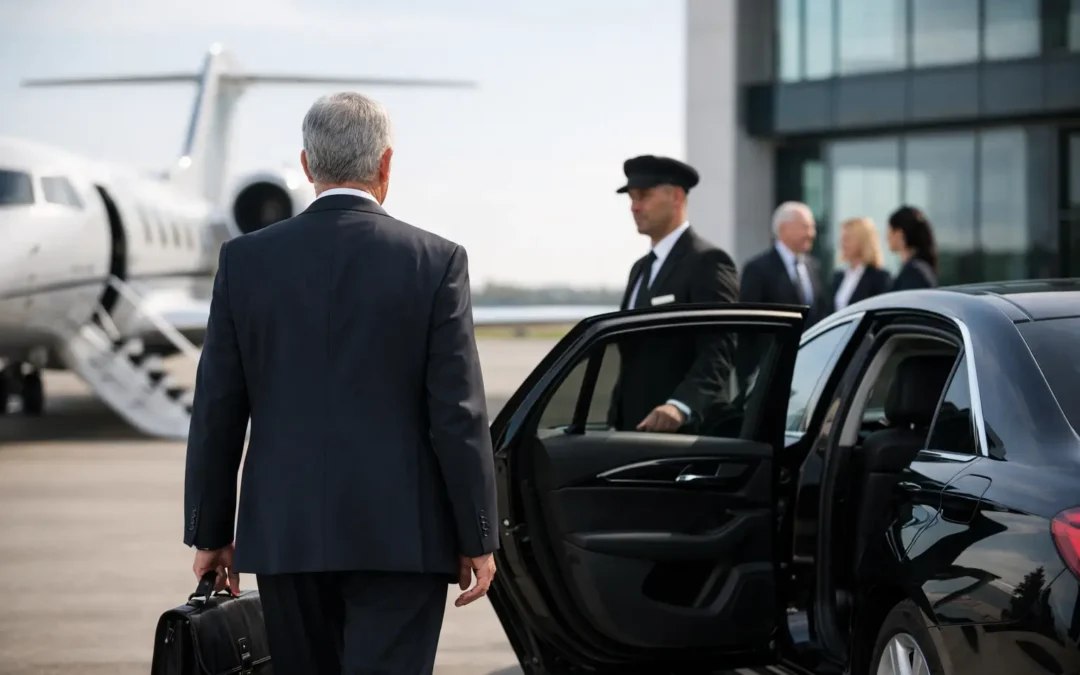
A board meeting can lose control before anyone reaches the conference room. A delayed airport pickup, a visible security gap, a driver who asks too many questions, or a vehicle lineup that draws attention can create risk long before the first agenda item begins. That is why secure transport for board meetings is not a convenience purchase. It is a business continuity decision.
For executive teams, board directors, general counsel, and the assistants coordinating every moving part, transportation sits at the intersection of privacy, timing, and reputation. The stakes are often higher than they appear. Sensitive discussions around mergers, restructuring, litigation, leadership changes, or investor relations require more than punctual pickups. They require controlled movement, limited exposure, and a service model built around discretion.
What secure transport for board meetings actually means
The phrase is often misunderstood. Secure transport is not defined only by a luxury vehicle or a professional chauffeur. It is a coordinated operating standard designed to reduce exposure at each stage of the journey.
That starts with pre-trip planning. Pickup times are verified against live schedules. Routing is reviewed with contingencies in mind. Driver assignments are vetted, briefed, and aligned to the client profile. Arrival procedures are established in advance so that directors and executives can move from residence, office, FBO, hotel, or private event site without unnecessary visibility.
It also extends to conduct. For board-level travel, discretion is not a marketing phrase. It is a baseline expectation. Chauffeurs should understand that conversation, passenger identity, itinerary details, and destination purpose remain confidential. Communication should be concise, professional, and limited to what the moment requires.
The vehicle itself matters, but mainly as part of a larger system. Late-model premium sedans and SUVs support comfort and image, yet the real value lies in maintenance standards, cleanliness, tinted privacy where permitted, and the confidence that the car arriving is exactly the one expected.
Why board meeting transport demands a higher standard
Board meetings concentrate people, information, and timing pressure into a narrow window. That changes the transportation brief.
One missed movement can affect quorum, delay a vote, compress a committee session, or create a visible disruption in front of investors or internal leadership. For publicly traded companies and private firms alike, board calendars are structured tightly. Executives may be arriving from separate cities, private terminals, corporate offices, or hotels, often with little margin for error.
There is also the issue of confidentiality. Board activity can trigger speculation when movements become noticeable. If directors arrive in a string of uncoordinated vehicles, wait at a busy hotel curb, or share space with general event traffic, privacy weakens quickly. Secure transportation reduces those points of exposure by managing arrivals with greater precision.
Not every meeting requires a security team or hardened protocols. That depends on profile, location, public visibility, and the nature of the agenda. But nearly every board meeting benefits from transportation that treats privacy and timing as operational priorities rather than optional upgrades.
The operational details that matter most
At this level, execution is shaped by small decisions. The service provider should know whether the principal prefers curbside pickup or a more discreet arrival point. They should understand whether the meeting venue has a private entrance, loading restriction, security desk, or underground access. They should also be prepared for last-minute calendar shifts without creating confusion for passengers.
A well-run program includes centralized manifest management, real-time trip oversight, and communication that flows through the right channel, usually the executive assistant, chief of staff, travel manager, or security contact. That keeps principals insulated from logistics noise while preserving visibility for the people managing the day.
Chauffeur quality is another dividing line. For board travel, the standard is not simply safe driving. It is composure. A qualified chauffeur reads the tone of the client, protects quiet space, anticipates route changes, and handles venue staff, security personnel, and assistants with calm professionalism. Nothing should feel improvised.
Routing deserves more attention than many buyers realize. The fastest route is not always the best route. Depending on location and event profile, secure transport planning may favor less visible arrival patterns, reduced dwell time, or alternate staging areas. There is always a trade-off. More discretion can add complexity, and more visible convenience can increase exposure. The right choice depends on the meeting’s purpose and profile.
Choosing the right vehicle strategy
Vehicle selection should reflect the composition of the board group and the nature of the day. For one or two directors moving privately from an FBO or residence, a premium sedan may be the most appropriate choice. For senior leaders traveling with close protection, briefing materials, or additional staff, a full-size SUV usually provides better spacing and flexibility.
If the meeting involves multiple directors arriving from the same hotel or aviation facility, coordinated SUV service may offer more control than a larger shuttle format. Group vehicles can be efficient, but they can also create visibility and waiting time. For high-level board activity, individual or paired transfers often protect both schedule integrity and privacy more effectively.
There are exceptions. Annual meetings, leadership off-sites, and multi-day governance sessions may justify larger vehicle plans, especially when moving attendees between venues under tight timing. In those cases, the service standard must remain consistent across the entire program. One weak link in a multi-vehicle operation can affect the whole schedule.
Secure transport for board meetings in multi-city scenarios
The complexity increases when board members are flying in from several markets or when meetings are tied to roadshows, site visits, earnings events, or investor programming. This is where global coordination matters.
A transportation partner handling multi-city executive travel should be able to deliver the same service standards across markets, with local expertise and central oversight. That includes consistent chauffeur etiquette, vehicle quality, manifest accuracy, and escalation procedures. Senior executives should not have to adjust expectations every time the city changes.
This is also where 24/7 support becomes less of a luxury and more of an operational safeguard. Flights move, meetings run long, weather changes, security details shift, and principals alter plans in real time. The provider’s value is measured by how quietly and quickly those adjustments are managed.
For organizations that operate globally, a fragmented transportation approach often creates avoidable risk. Different local vendors may be acceptable for standard travel, but board-level movement benefits from tighter control, fewer handoffs, and one accountable coordination structure.
What executive assistants and travel teams should ask
When evaluating a provider for secure board transportation, the right questions are practical. How are chauffeurs selected and briefed for confidential assignments? Who monitors trips in real time? What happens if a vehicle issue or schedule change occurs ten minutes before pickup? How are manifests handled, and who has access to passenger information?
It is also worth asking how the provider manages discretion on-site. Do chauffeurs understand executive arrival etiquette? Can they stage off-site until called forward? Are they experienced with private aviation terminals, headquarters security teams, and high-profile venues?
Price has its place, but for board movement it is rarely the best decision filter. The more relevant measure is failure tolerance. If the answer is effectively zero, the service model should reflect that reality.
A premium provider such as MLR Worldwide Service is built for this kind of assignment because the expectation is not simply a ride delivered on time. It is white-glove service supported by planning discipline, global consistency, and absolute discretion.
When more security is necessary
Some board meetings require a deeper layer of protection. That may involve public-company visibility, contentious shareholder issues, executive leadership changes, litigation, labor actions, or international destinations with elevated exposure. In those cases, transportation planning may need to align with corporate security teams, venue security, or close protection personnel.
The answer is not always to increase the visible footprint. Sometimes a quieter profile is the safer one. Sometimes overt security is appropriate. The right approach depends on threat level, destination, and principal preference. What matters is that the transportation partner can adapt without sacrificing service quality.
Secure transport for board meetings works best when it is treated as part of the meeting strategy itself. Not an afterthought, and not a generic booking handed off to whichever car service has availability. The boardroom may be where decisions are made, but control starts the moment each principal steps into the vehicle. Choose a transportation standard that protects that moment with the care it deserves.