

What Actually Sets Luxury Car Service Apart in Dubai
Here's the thing about luxury car service in Dubai — it's not really about the car. Sure, you get a polished vehicle and a uniformed driver, but the real product is control. Predictable timing. Elevated safety. Discreet handling that lets executives, families, and private aviation clients move through the city without friction.
Think of it like hiring a personal assistant for ground travel. The sedan is just the tool. The value lives in knowing your pickup will happen exactly when promised, your route has been planned ahead of time, and nobody will compromise your privacy along the way.
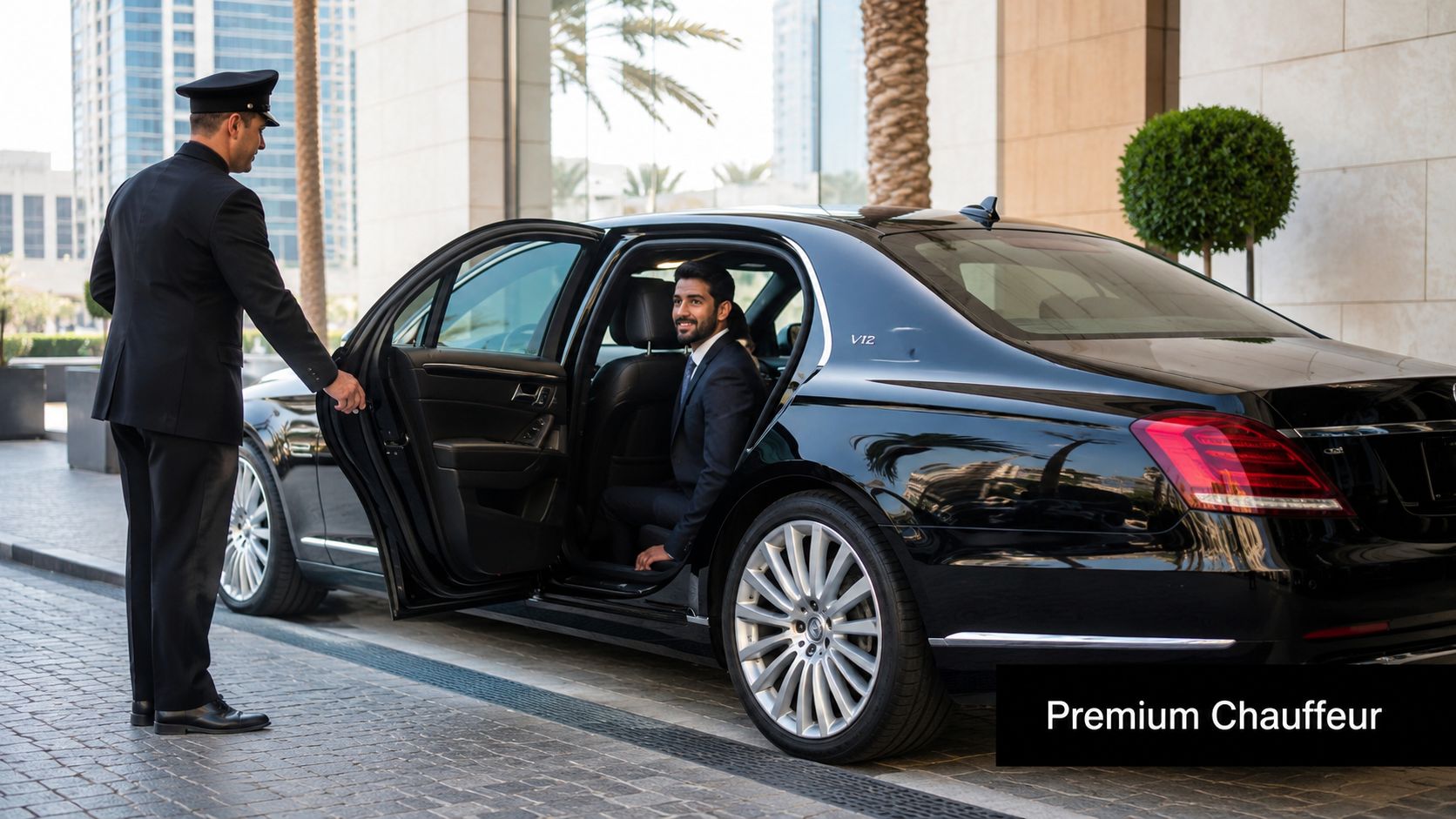
That's the difference between showing up at DXB with a confirmed meet-and-greet versus rolling the dice on a ride-hail and hoping for the best. One approach trades certainty for immediacy. The other builds reliability into every step of the journey.
So what actually separates a premium chauffeur service from a standard ride? A few dimensions matter most:
- Booking control — Fixed pickup windows, advance confirmations, and named chauffeurs eliminate the guesswork. No wondering if your driver knows the route or will show up on time.
- Vehicle condition — Late-model cars, climate-ready cabins with proper interior filtration, and chilled water waiting for you. Not a mixed bag of random vehicles.
- Chauffeur professionalism — Trained drivers who act as hosts, protect your privacy, and understand corporate protocols without being told.
- Privacy and security — Vetted staff, discreet handoffs, and secure handling of passenger data. Your information doesn't get treated casually.
- Accountability — Real contracts, insured services, and clear escalation channels when something goes wrong. Not just an app-based dispute process.
Key insight: For many VIPs, the decision comes down to a simple question: "Will this save me time and stress?" If the answer is yes, premium service wins every time.
Luxury Car Service Dubai vs Standard Ride-Hail at a Glance
When you're weighing options, the differences show up clearly across the factors that matter most to executives and VIP clients. Here's a side-by-side look:
| Dimension | Luxury Car Service Dubai | Standard Ride-Hail |
|---|---|---|
| Booking Control | Fixed windows, flight tracking, concierge | On-demand, variable ETAs |
| Vehicle Condition | Late-model, climate-prepped, sanitized | Mixed ages, variable cleanliness |
| Chauffeur Standard | Professionally trained, uniformed | Varies by driver |
| Privacy | Discretion protocols, secure data | Limited privacy controls |
| Accountability | Contracted service, insurance, backups | App-based dispute process |
The gap isn't subtle. One model is built around delivering a consistent, controlled experience. The other prioritizes speed and availability — which works fine until it doesn't.
When the Right Fit Becomes Obvious
Short scenarios help clarify which service matches your situation. A family landing in mid-summer Dubai benefits enormously from tinted glass, pre-cooled cabins, and someone handling their luggage without being asked. A private jet client needs FBO access, discreet parking, and timing that syncs perfectly with their ground handlers. Neither scenario works well with a standard ride-hail.
In the next part of this guide, we'll break down fleet tiers, airport procedures, and a booking checklist so you can match the right provider to your itinerary — and your risk tolerance.
Fleet Standards and Vehicle Tiers Explained
A top-tier Dubai fleet operates less like a flashy showroom and more like a carefully assembled toolkit. Every vehicle tier has a specific job, and matching the right ride to the right trip prevents headaches on the ground. Picture this: a solo executive flying from Dubai to London needs a quiet, climate-controlled sedan. A family of four checking into a beachfront hotel needs space, shade, and luggage room. Meanwhile, a roadshow for six demands coordinated vans or SUVs with backup vehicles standing by.
The local climate completely changes the rules of vehicle care. Extreme heat and fine sand mean high-capacity cabin cooling, heavy-duty filtration, regular underbody washes, and frequent interior sanitization aren't optional extras—they are baseline expectations. Because of this, maintenance schedules run tighter than they would in cooler cities, and presentation standards get enforced before every single pickup.
- Air conditioning reliability: AC failures are the number one comfort complaint during the summer months.
- Sand management: Fine sand accelerates cabin wear and grille corrosion, which means exterior and HVAC checks happen far more often.
- UV protection: Tinted glass and sunshades keep the cabin comfortable while preventing interior damage from the sun.
Key point: Think of vehicle tiers like instruments in an orchestra. Each plays a specific role, and the whole performance falls flat if even one is out of tune.
Common Vehicle Tiers and Their Practical Uses
Executive sedans handle discreet, efficient transfers for solo travelers or VIPs who prioritize privacy and punctuality. The focus here is a silent cabin, seamless luggage handling, and a chauffeur who doubles as a professional host.
Premium SUVs serve as the everyday workhorse for families. They offer plenty of luggage space, easy child-seat installation, and a higher seating position that handles Dubai's varied curb and valet conditions with ease.
Luxury vans or people-movers fit corporate groups, event shuttles, and families needing room for six plus bags. They trade a bit of style for pure capacity and coordinated logistics.
Specialty vehicles cover armored cars, extended-wheelbase limousines, and concierge minibuses. You will see these deployed for high-risk profiles, celebrity movements, and bespoke event transfers.
- Example scenarios
- Solo CEO arriving on a DG flight: An executive sedan with flight-tracking pickup.
- Family of four landing midday: A premium SUV with booster seats and a pre-cooled cabin.
- Corporate roadshow team of six: A luxury van with a backup vehicle and onboard Wi-Fi.
Fleet Presentation and Operational Standards
Short, consistent checklists ensure vehicles meet Dubai's high expectations. Drivers verify cooling, interior scent, charger availability, and bottled water before pulling away. Fleet teams schedule more frequent deep cleans during the summer and rotate vehicles to minimize wear from sand exposure.
- Best practices summary
- Daily interior inspection and HVAC filter checks.
- Weekly exterior sand removal and underbody rinse.
- Pre-assignment presentation checklist completed and signed off.
"A late-model car with a warm cabin is a complaint waiting to happen. Climate-ready prep is non-negotiable."
Choosing the right vehicle tier depends entirely on who is traveling and what the day looks like. Here is how the common categories break down:
Typical Vehicle Tiers in a Premium Dubai Chauffeur Fleet
| Vehicle Tier | Best For | Typical Use Case |
|---|---|---|
| Executive Sedan | Solo VIPs | Airport shuttle, executive meetings |
| Premium SUV | Families and small groups | Hotel transfers, city tours |
| Luxury Van | Groups up to six | Roadshows, event logistics |
| Specialty Vehicles | High-security or ceremonial needs | Armored transfer, celebrity arrivals |
Matching the tier to the trip profile ensures you never pay for space you do not need, or worse, end up cramped when you require room to breathe. Keeping these tiers reliable and presentable takes rigorous upkeep. Check out our guide on fleet care to learn how maintenance makes it happen: Learn more about Fleet Maintenance Best Practices in our article.
Airport and FBO Transfers in a City That Never Stops
Dubai’s airports and private FBOs handle a massive volume of premium passengers daily. A reliable luxury car service in Dubai takes that chaos and turns it into a predictable, low-friction arrival. The meet-and-greet actually starts before the plane lands. Live flight tracking adjusts pickup windows automatically, so chauffeurs arrive exactly when the client clears the door—not at a fixed ETA that falls apart the moment a flight is delayed. Coordination looks different at DXB versus a private FBO, so knowing the terminal rules ahead of time keeps surprises at bay.
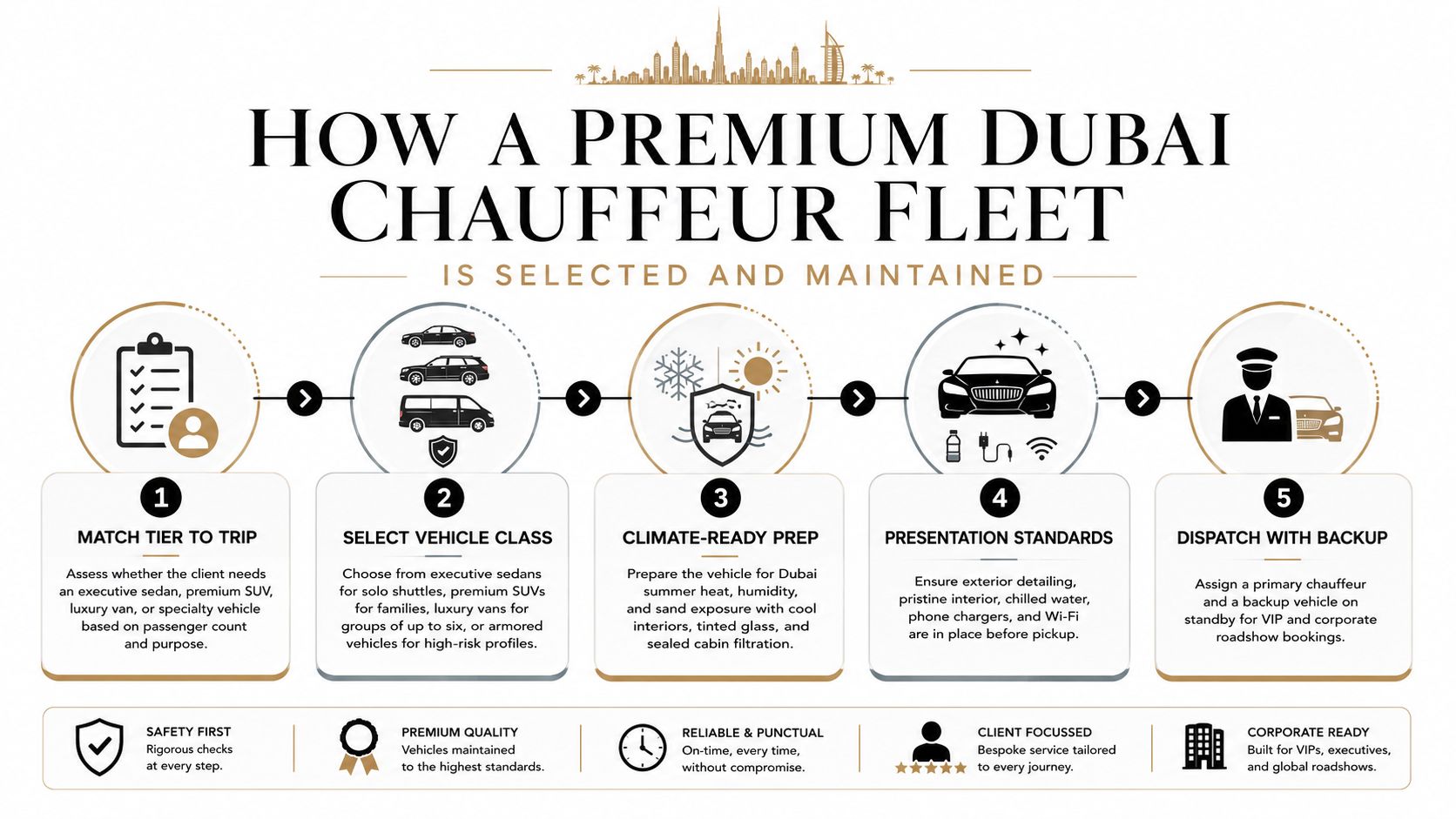
This infographic breaks down the five-step fleet selection and readiness process, showing how providers match vehicle tiers to client needs and Dubai's intense climate.
Airport Meet and Greet Practices
A professional pickup at a major terminal usually involves a branded placard, fast-track escorts, and pre-cleared parking. FBO arrivals are a different beast. The handoff happens right on the ramp or inside a private lounge, requiring chauffeurs to coordinate directly with ground handlers and baggage teams. Luggage gets the concierge treatment here: sealed tags, discreet transfers, and verification against a manifest to cut down on loss risk and speed up the exit.
- Flight tracking keeps drivers on-site only when necessary, cutting wait times and unnecessary idling.
- Chauffeur briefing sheets outline client preferences, security notes, and contact procedures for a seamless handoff.
- Providers stage backup vehicles for premium itineraries or multi-leg corporate roadshows, just in case.
Key takeaway: Tight coordination between flight ops, FBO staff, and the chauffeur team protects client time and privacy at every step.
Sample Itinerary Showing Affiliate Consistency
- Flight lands in London at 09:45 local time.
- The global affiliate confirms arrival and notifies the Dubai base.
- The DXB chauffeur meets the client at the gate lounge, assists with luggage, and drives them to a Downtown hotel.
This scenario illustrates how a vetted global affiliate model maintains the same standard whether a client departs from New York or London. Consistent checklists and shared protocols ensure identical presentation, timing, and privacy guarantees across different cities.
- Consider an executive flying overnight. They appreciate stepping into a pre-cooled car with ready chargers and a chauffeur who already has the hotel contact preloaded.
- Or picture a private jet client arriving at an FBO. They get a ramp-side handoff and direct access to a reserved lane for a rapid departure.
Practical Tips for Booking Airport Transfers
- Share flight numbers and arrival FBO details early to allow for proper meet-and-greet planning.
- Note any security or VIP credentials so chauffeurs can access restricted areas without hassle.
- Request backup vehicle coverage for roadshows or events to eliminate schedule risk.
For a deeper dive into airport transfer logistics and service levels, read our in-depth article on luxury airport car service at MLR Worldwide Service.
"When timing matters, the difference between an on-time chauffeur and a missed connection is more than minutes — it's reputation."
Pricing, Contracts, and the Real Cost of Doing It Right
Luxury car service Dubai pricing feels like a puzzle until you see the pieces. Start by viewing quotes as a bundle of time, risk coverage, and operational guarantees rather than just a vehicle rate. This perspective helps travel managers compare offers on equal terms and avoid surprises.
Hourly rates are common for chauffeur-driven time blocks and are usually quoted with a minimum booking—often 3 to 4 hours for airport or downtown runs. Point-to-point pricing is simpler for single transfers, while daily or multi-day retainers suit roadshows and crews needing continuous coverage. Event packages combine vehicles, drivers, and on-site coordinators for a fixed fee.
For example, a 10-hour roadshow day billed hourly may look cheaper on paper than a day retainer that includes backup coverage. However, the hourly model can balloon once after-hours, parking, and waiting times are added. This means the quoted number is only a starting point.
Common inclusions and exclusions shape final cost clarity. Standard inclusions usually cover the chauffeur, fuel within agreed zones, basic bottled water, and vehicle presentation checks. Typical add-ons billed separately include:
- After-hours and public holiday surcharges
- Airport parking and access fees
- Tolls and valet charges
- Extra luggage handling or oversized-item fees
"The cheapest quote often hides operational risk"
A low headline rate without backup vehicles, formal SLAs, or clear cancellation terms transfers risk to the client.
Peak-season adjustments matter in Dubai. Major conferences, EXPO-style events, and Formula-style weekends can trigger surge pricing or require higher deposits. Expect advance booking windows and stricter cancellation penalties during these periods. Minimum hours, standby chauffeurs, and dispatched backups are how reliable providers protect schedules—costs that appear in higher but steadier quotes.
Contracts provide a second layer of value. A well-drafted contract will define service windows, escalation paths, insurance limits, data-handling clauses, and performance remedies. Ask for response-time SLAs for no-shows and vehicle substitutions, and insist on written accountability for subcontracted affiliates if your itinerary crosses borders.
Quick framework to compare quotes like-for-like
- Normalize the Scope — list identical pickup/drop points, wait times, and passenger counts.
- Map Inclusions — mark which line items are in the base price versus optional.
- Add Risk Coverage — verify backup vehicle, chauffeur replacement, and insurance limits.
- Factor Seasonality — confirm surge triggers and holiday rates.
- Score Reliability — prefer providers showing 24/7 operations, vehicle rotation plans, and documented chauffeur vetting.
Short checklist of red flags
- Missing written backup vehicle commitment
- Vague insurance or liability language
- Open-ended “after-hours as charged” without clear rates
Practical example: two quotes for a two-day roadshow. Quote A low hourly rate but no backup clause; Quote B higher retainer with dedicated backup and an SLA guaranteeing arrival within 15 minutes of scheduled pickup. For senior executives, Quote B often wins because time and reputation cost far more than the margin difference.
When you build cost comparisons around time certainty and operational accountability rather than lowest per-hour math, the real cost of doing it right becomes far easier to justify.
Booking, Concierge Support, and Last-Minute Changes
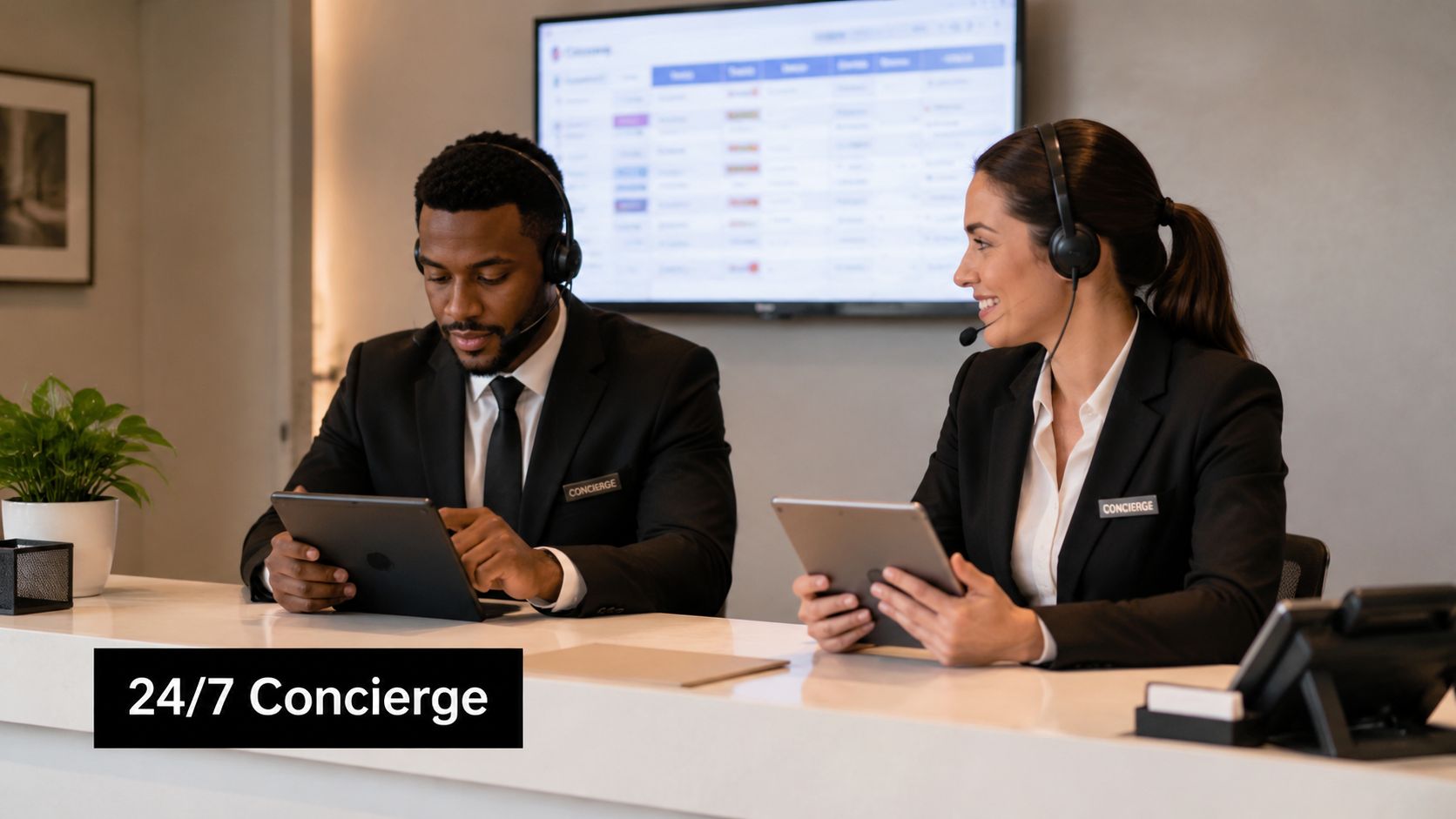
Booking a luxury car service in Dubai ought to feel like handing your itinerary to a calm, capable partner and watching everything fall into place. That first inquiry kicks off a quick intake—dates, pickup and drop-off points, passenger count, and any specific requirements. Think of it as the make-or-break moment that determines whether your day runs smoothly or turns reactive.
A 24/7 concierge team operates much like an air traffic controller for ground mobility. By tracking flights, traffic, and hotel check-ins in real time, they can adjust pickup windows and reassign chauffeurs the moment delays pop up. So when a 2 a.m. itinerary change comes through, it is handled via established protocols rather than frantic, ad-hoc phone calls.
Confirmation Cadence and Chauffeur Briefings
- An initial confirmation hits your inbox within 30 minutes of inquiry, complete with a provisional itinerary and estimated cost.
- Final confirmation arrives 24 hours before pickup, detailing the chauffeur's name, vehicle plate, and direct contact.
- A pre-assignment briefing goes out to the chauffeur 60–90 minutes before pickup, covering flight status, client notes, and security instructions.
"Timely confirmations and concise chauffeur briefings turn last-minute changes into small operational puzzles rather than crises."
Real-Time Coordination Practices
- Flight and traffic tracking feed into a single dashboard that automatically adjusts pickup windows.
- Operations dispatchers keep direct hotlines with FBOs, hotels, and venues for immediate access.
- Backup vehicles and standby chauffeurs are pre-staged for high-stakes itineraries, such as multi-city roadshows.
Real-world examples bring this to life. Consider a private jet arriving at an FBO: the concierge secures ramp access and alerts customs clearance while the chauffeur waits at the ramp with a discreet placard. Or take a corporate roadshow—two vehicles running on staggered schedules handle panel runs and executive shuttles while a supervisor keeps a close eye on the timing.
Checklist to Send When Booking
- Flight numbers and ETAs, including alternate legs if applicable.
- Mobile contacts for each passenger, plus an emergency contact.
- Dress code expectations and meeting details for chauffeur presentation.
- Security notes, such as protective details, restricted handoffs, or safe rooms.
- Special handling requests like child seats, wheelchair assistance, or oversized luggage.
A few best practices for clients go a long way. Confirm meeting room contact details, flag any VIP names to avoid public signage, and share your preferred payment or invoicing instructions upfront. A little preparation like this cuts down on friction when the day arrives.
Read also: Learn more about Luxury Travel Concierge Services in our article (https://mlrworldwideservice.com/2026/02/13/luxury-travel-concierge-services/)
Key takeaway — a well-run luxury car service Dubai turns last-minute changes into a managed flow, thanks to proactive confirmations, concise chauffeur briefings, and a vigilant 24/7 concierge team.
Security, Privacy, and Choosing the Right Provider
Security and privacy aren't optional extras when you're booking a luxury car service in Dubai for executives, family offices, or private aviation clients. Think of the provider as a personal security cell that also handles your ground logistics. The wrong choice doesn't just waste time — it puts reputation and safety at risk.
Chauffeur vetting is your first line of defense. You want background checks, clean driving records, customer-service training, and experience handling high-profile clients with discretion. Don't take their word for it. Ask for documented vetting policies and proof that training happens regularly, not just once.
Vehicle tracking and data handling make up the second layer. GPS tracking is standard, but what matters is how the data is managed. Trip logs should be encrypted, access should be restricted, and retention limits should be clear. Ask where the logs sit, who can pull them up, and whether encryption covers data at rest — not just in transit.
Key insight: A provider that treats trip data like financial records is one that understands both privacy and liability.
Contingency planning rounds out the picture. Check whether backup vehicles are actually available, whether named substitutes are assigned in advance, and whether no-show SLAs are spelled out in writing. Insurance limits matter too — verify passenger liability and third-party coverage, especially if you're crossing jurisdictions.
Checklist for Evaluating Providers
- Written chauffeur vetting process with verification timestamps and repeat checks
- Real-time vehicle tracking with encrypted data storage and a clear data-retention policy
- Insurance certificates showing at least industry-standard passenger and liability limits
- Backup vehicle commitment and replacement SLA in writing
- Clear cancellation and no-show terms with reasonable penalties and refund rules
Decision Framework for Common Use Cases
Match the travel type to the provider's strengths to make a fast, confident choice.
- Corporate Roadshows — Go with providers that offer multi-vehicle coordination, event supervisors, and guaranteed backups. Timing is everything here.
- FBO Arrivals — Prioritize chauffeurs who have ramp access experience and pre-cleared credentials. Familiarity with private aviation terminals saves real minutes.
- Event Shuttles — Look for providers experienced in crowd logistics, staged vehicles, and on-site coordination. Volume changes everything.
- Family Transfers — Choose operators that emphasize child-seat options, discreet routes, and privacy protocols. Comfort and confidentiality both matter.
Practical Questions to Ask
- How often do you re-vet chauffeurs, and what does ongoing education look like?
- Can you share an insurance certificate and a sample SLA for no-shows?
- How is passenger and trip data encrypted and stored?
- Do you commit a backup vehicle, and what's the guaranteed arrival window?
- How are last-minute cancellations or multi-leg changes handled — operationally and financially?
Practical takeaway: For luxury car service Dubai buyers, documented processes beat polished marketing every time. Contracts that bind backups, insurance, and data policies save time and reduce risk.
Short next step: Run this checklist during your first inquiry and score each provider. The one offering the strongest operational guarantees per dollar is usually the right call for protecting time, privacy, and reputation.
Frequently Asked Questions About Luxury Car Service in Dubai
What Does a Typical Hourly Rate Include for Dubai Luxury Car Bookings?
When you pay an hourly rate for a Dubai luxury car service, you are typically covering the chauffeur, the vehicle, fuel within city limits, bottled water, and standard presentation checks. However, extras like airport fees, parking, and wait time beyond the agreed window often appear as separate line items. Always map out exactly what a quote includes so you aren't blindsided by hidden fees.
How Far in Advance Should I Book During Dubai Peak Season?
Timing is everything during Dubai's busy season. For standard executive travel around major conferences or holiday weekends, aim to book 2 to 4 weeks ahead. If you are coordinating a large event or a multi-vehicle roadshow, you need to secure your provider 6 to 8 weeks in advance. This lead time locks in your backup vehicles and on-site supervisors.
How Do Providers Handle Private Aviation Arrivals at FBOs?
Handling private aviation requires precise coordination. Experienced chauffeurs work directly with ground handlers and flight operations to secure ramp access and execute a seamless ramp-side handoff. Furthermore, top-tier providers rely on a vetted affiliate network. This ensures that whether you fly in from London or New York, the meet-and-greet experience remains consistently flawless.
What Should I Do When Plans Change at Short Notice?
When schedules shift unexpectedly, reach out to your 24/7 concierge team right away. Think of them as an air traffic controller for your ground transportation. Providers who keep standby chauffeurs and pre-staged backup vehicles can reassign resources in minutes, saving both your schedule and your reputation.
Why Fleet Maintenance Matters for Dubai Conditions
Dubai's climate demands rigorous fleet upkeep. Climate-ready preparation—think reliable AC, sealed cabin filtration, and constant sand removal—keeps the cabin comfortable and prevents mid-route breakdowns. This strict maintenance schedule isn't an optional extra; it is a core part of the service value.
How Do I Compare Value Between Quotes?
Comparing quotes requires a level playing field. You need to look beyond the bottom line and verify the operational details:
- Normalize the scope across providers.
- List out every single inclusion.
- Verify backup and insurance commitments.
- Account for seasonal demand.
Always favor providers who document their service level agreements (SLAs) for no-shows and vehicle substitutions. Written operational guarantees save you time and mitigate risk.
Key takeaway: Prioritize documented reliability over the lowest headline rate. Protecting your time, privacy, and reputation is always worth more than a slight discount.
For dependable executive transfers and 24/7 concierge support, visit MLR Worldwide Service.