
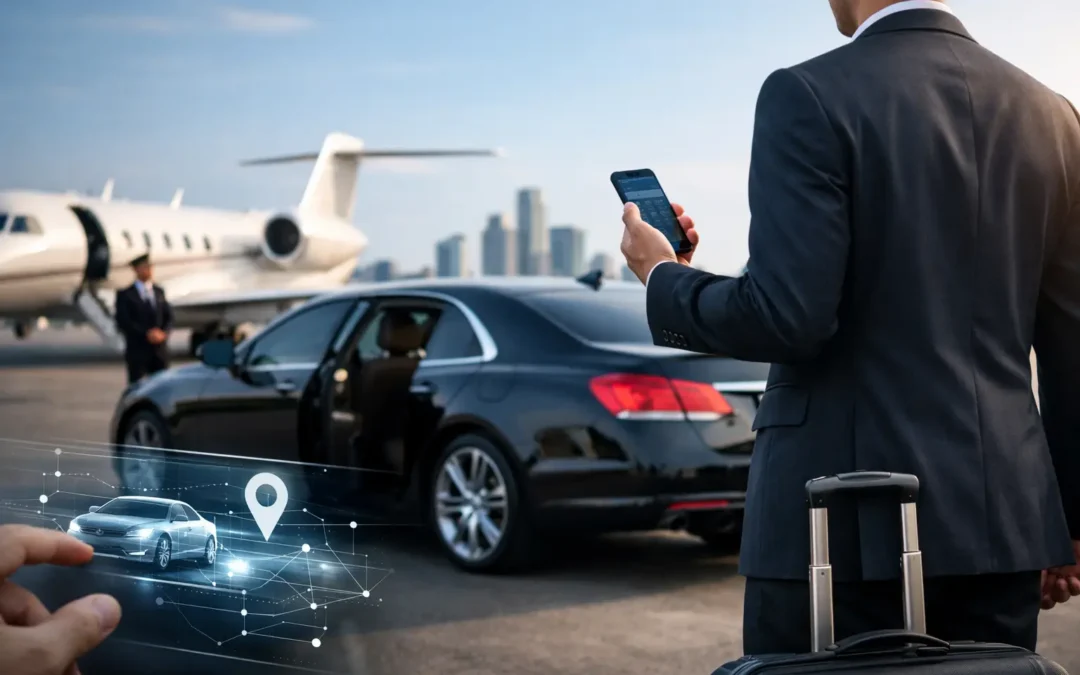
A principal lands 20 minutes ahead of schedule at a private terminal. The meeting address has changed, security has adjusted the preferred entrance, and the executive assistant needs confirmation before the aircraft door opens. This is where executive transportation technology trends prove their value: not as visible gadgets, but as the operational intelligence behind a composed, precisely managed journey.
For high-stakes travelers, technology should reduce friction without reducing the human standard of care. The strongest systems give chauffeurs, dispatch teams, travel coordinators, and clients a shared view of the itinerary while protecting sensitive details. The goal is not automation for its own sake. It is time protection, discretion, and confident decision-making when conditions change.
Executive Transportation Technology Trends That Matter
Real-time itinerary intelligence
Flight tracking has moved far beyond a simple arrival alert. Modern dispatch platforms can monitor commercial flight updates, private aviation movement, estimated landing times, terminal changes, traffic conditions, and road closures in one operating view. When applied well, this allows transportation teams to reposition vehicles, revise chauffeur call times, and inform stakeholders before a delay becomes a problem.
The distinction matters. A delayed flight does not always require a later pickup. A traveler may clear customs quickly, use a different fixed-base operator, or need to depart directly for a confidential meeting. Technology supplies the signal; an experienced operations professional interprets what it means for that specific traveler.
For executive assistants and corporate travel teams, real-time visibility also reduces the need for repeated status checks. They should be able to receive concise, useful confirmation: chauffeur assigned, vehicle in position, flight monitored, and client received. The right update is calm and actionable, not a stream of unnecessary notifications.
AI-assisted dispatch, with human oversight
Artificial intelligence is beginning to support route planning, capacity forecasting, chauffeur allocation, and exception management. It can identify patterns across large volumes of trip data, such as recurring airport congestion, realistic transfer times between meeting locations, or likely demand around major events. That intelligence can improve preparation well before the wheels are in motion.
Yet executive travel is not a commodity routing exercise. An algorithm may recommend the fastest route, while a seasoned chauffeur recognizes that it passes through a congested security zone, offers a poor arrival experience, or is unsuitable for a high-profile passenger. It may assign a nearby vehicle without understanding a client’s preference for a particular sedan configuration, chauffeur, or privacy protocol.
The most credible model is human-led technology. AI can surface options and flag risks; dispatch professionals make the final judgment. This approach preserves accountability, particularly for VIP movements, board-level schedules, and multi-stop roadshows where one late arrival can affect an entire day.
Privacy Is Becoming a Technology Requirement
A premium transportation provider holds information that demands careful treatment: flight details, home and office addresses, event schedules, travel companions, and sometimes security instructions. As digital coordination expands, privacy standards must expand with it.
Secure booking environments, role-based access, encrypted communications, and disciplined data retention are increasingly central to service quality. A travel coordinator may need full itinerary visibility, while a chauffeur only requires the details necessary to execute the assignment. Not everyone involved in a trip should see every detail of that trip.
This is especially relevant for private aviation clients, public figures, corporate transactions, and legal or financial events. Convenience features should never create an unnecessary trail of sensitive information. For this audience, absolute discretion is both a service promise and an operational practice.
Digital client profiles that respect preferences
Personalization technology can create a more consistent experience across cities. A carefully maintained traveler profile might document vehicle preferences, preferred temperature range, route considerations, luggage requirements, language needs, or a request for minimal conversation. It can also record practical details, such as an assistant’s preferred communication method or an executive’s usual FBO.
There is a clear benefit: clients do not need to repeat themselves at every destination. But there is also a boundary. A useful profile captures service-relevant preferences, is reviewed for accuracy, and is handled with restraint. The purpose is attentive care, not excessive data collection.
For a global provider, this is one of the most meaningful executive transportation technology trends. It helps translate a familiar service standard from New York to London, Los Angeles to Dubai, while allowing for local conditions and client-specific requirements.
The Chauffeur Experience Is Becoming More Connected
The chauffeur remains the most important point of contact in executive ground transportation. Technology should make that professional more prepared, not more distracted. Secure mobile tools can provide live dispatch notes, guest changes, approved routing, arrival instructions, and direct support from the operations center.
This is particularly valuable on complex assignments. Consider an executive roadshow with a shifting meeting sequence, a group arrival requiring coordinated vehicles, or an airline crew movement affected by a gate change. A connected chauffeur can receive an updated instruction promptly, while the dispatcher maintains control of the broader plan.
The trade-off is discipline. Chauffeurs should not be managing complicated applications while driving or receiving a distracting volume of alerts. Technology must be designed around safety and judgment, with clear protocols for when to stop, confirm, and proceed.
Safety technology beyond vehicle tracking
GPS tracking, geofencing, and route monitoring are now common expectations, but the more advanced applications focus on prevention. Vehicle telematics can identify maintenance needs before they create an interruption. Driver-assistance systems can support safer operation in heavy traffic. Digital pre-trip inspections can provide a clearer record of vehicle readiness.
For secure transport, technology may also support monitored arrival zones, designated pickup procedures, and communication protocols between the chauffeur, security detail, and operations team. These capabilities are not substitutes for trained professionals or formal security planning. They are additional layers of awareness.
The appropriate level of technology depends on the assignment. A standard executive airport transfer requires a different approach than a sensitive VIP movement or a high-visibility event. Overengineering an ordinary trip can be intrusive; underpreparing a critical one can expose the client to avoidable risk.
Better Visibility for Complex Ground Programs
Corporate roadshows, investor meetings, conferences, and group movements present a different operational challenge: many travelers, many vehicles, and very little tolerance for ambiguity. Centralized transportation dashboards increasingly allow coordinators to monitor trip status, vehicle assignments, estimated arrival times, and active exceptions across an entire program.
The advantage is not simply knowing where every vehicle is. It is being able to resolve a problem early. If one meeting runs long, a dispatch team can assess downstream effects, adjust staging, and communicate selectively with the people who need to know. This keeps the client experience controlled, even when the itinerary is not.
For event planners, technology can also improve manifest management and reduce manual handoffs. But a dashboard cannot replace an on-site transportation manager when arrivals are high volume, venue access is constrained, or guest handling requires a polished personal presence. The best programs combine clear digital coordination with visible human leadership.
Electrification Will Advance at Different Speeds
Electric luxury vehicles are becoming more relevant to executive mobility, especially in cities with emissions regulations, corporate sustainability objectives, and reliable charging infrastructure. For the right itinerary, an electric vehicle can offer a quiet, refined cabin experience and align with a client’s environmental commitments.
The practical question is whether the vehicle fits the mission. Airport transfers, local executive movements, and planned city itineraries may be well suited to electrification. Extended roadshows, remote destinations, high luggage loads, and last-minute schedule changes may call for a different fleet strategy. Charging availability, weather, traffic, and backup planning all affect the decision.
Premium service means offering an informed recommendation rather than treating one vehicle type as the answer to every assignment. Fleet choice should support reliability first, then preference and sustainability goals.
What Clients Should Expect From Technology-Enabled Service
Technology is most valuable when it remains nearly invisible to the passenger. Clients should feel the results through punctual chauffeur arrivals, informed adjustments, accurate updates, secure handling of personal details, and consistent service across destinations.
They should also expect a real person to be reachable at any hour. Travel does not follow office hours, and exceptions rarely arrive at convenient moments. MLR Worldwide Service views technology as a tool for stronger coordination, supported by 24/7 concierge-level attention when plans require a decision rather than an automated response.
As transportation systems become more capable, the standard for premium travel will rise with them. The preferred partner will not be the one with the most features on a screen. It will be the one that uses intelligence, discretion, and experienced judgment to make every important arrival feel fully under control.