
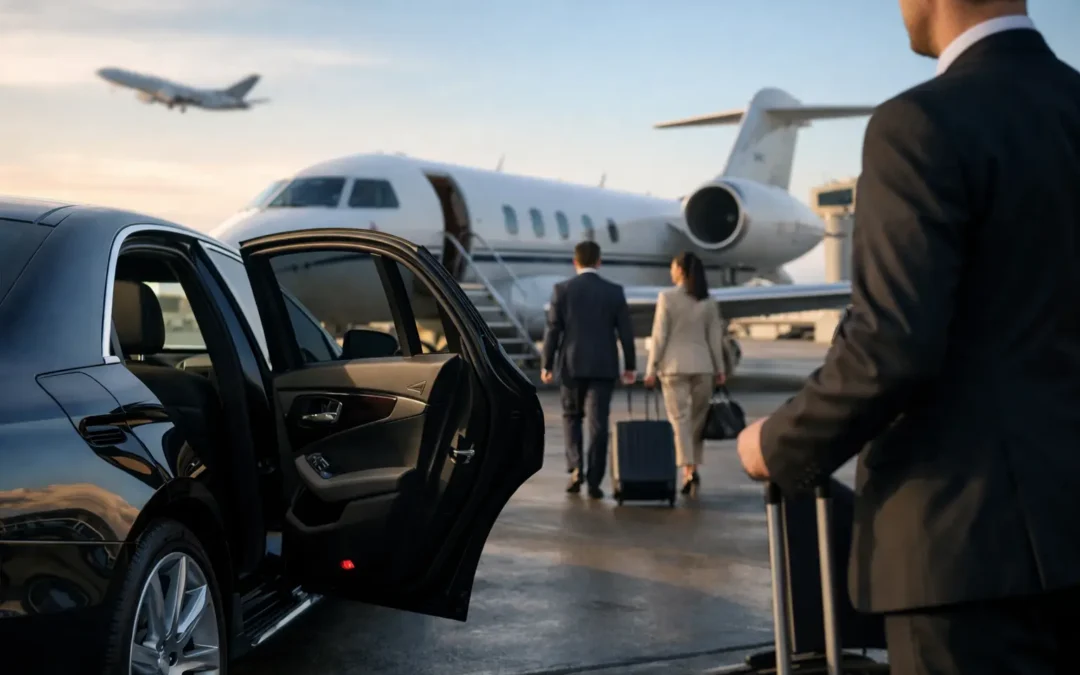
A delayed aircraft, a moved board meeting, and a security-sensitive passenger do not create three separate transportation requests. They create one operational assignment that must be handled without friction, explanation, or compromise. That reality is driving luxury ground transport trends toward a higher standard: transportation that protects time, privacy, and the traveler’s state of mind.
For executive assistants, travel managers, private aviation teams, and principals, the vehicle remains important. Yet the greater value is now found in the coordination around it. A premium sedan or SUV is only as effective as the chauffeur’s readiness, the accuracy of the flight monitoring, the discretion of the arrival process, and the ability to adjust before a change becomes a disruption.
Luxury Ground Transport Trends Are Raising the Standard
The luxury transportation market is moving beyond the traditional definition of premium service. Polished vehicles, professional chauffeurs, and bottled water are still expected. They are no longer differentiators on their own.
The current expectation is managed mobility. Clients want one accountable partner that can coordinate airport arrivals, FBO transfers, roadshows, executive dinners, multi-stop schedules, and last-minute changes with the same level of control in every city. For a traveler moving between New York, London, Dubai, and Los Angeles, inconsistent local execution is more than an inconvenience. It can affect meeting readiness, personal security, and confidence in the overall itinerary.
This shift favors providers that combine local knowledge with centralized oversight. The best experience is often invisible: the chauffeur is positioned early, the route has been considered, baggage requirements are known, and the traveler receives only the communication that is useful.
Electrification Is Becoming Part of the Luxury Expectation
Electric luxury vehicles are increasingly requested by corporations, family offices, and travelers with clear sustainability commitments. For some journeys, an electric sedan or SUV provides a quiet, refined cabin experience that suits executive travel particularly well. The reduced cabin noise can make calls and preparation more comfortable, especially on airport transfers and city-to-city engagements.
However, electrification requires thoughtful planning rather than a blanket vehicle substitution. Charging access, vehicle range, luggage volume, weather, route length, and the timing of a client’s next movement all matter. An electric vehicle may be an excellent fit for a controlled metropolitan itinerary, while a long-distance journey, high luggage load, or tightly timed roadshow may call for a different fleet selection.
This is where a concierge-led approach matters. Sustainability should support the itinerary, not introduce uncertainty into it. Sophisticated transportation planning offers electrified options where they make operational sense while maintaining reliable alternatives when the schedule leaves no room for compromise.
Privacy Is Designed Into the Journey
Executive travelers increasingly view privacy as a service standard, not an optional upgrade. The need is especially clear for high-profile principals, financial leaders, legal teams, entertainment clients, and travelers arriving by private aviation. Discretion begins long before the door opens.
It includes carefully managed chauffeur assignments, limited access to itinerary details, appropriate pickup procedures, and communication protocols that do not expose unnecessary information. A chauffeur should understand when conversation is welcome and when quiet is the more professional choice. They should also know that a vehicle is often a working environment, where confidential calls and sensitive discussions may take place.
Technology can improve this experience, but it must be used with restraint. Real-time status updates help coordinators stay informed. They should not result in excessive messages to the passenger or broad distribution of location information. The most effective model gives the right people visibility while preserving the traveler’s confidentiality.
Real-Time Coordination Is Replacing Reactive Service
Flight tracking and itinerary monitoring have changed the baseline for airport and FBO transportation. A service provider should not wait for a client to report that a flight is early, delayed, or diverted. Those changes should be recognized, assessed, and addressed before the traveler needs to ask.
The same principle applies to roadshows and multi-stop business travel. An executive’s day can change in minutes when a meeting runs long, a venue entrance is moved, or a participant is added to the schedule. Reactive service treats each change as a new problem. Proactive coordination considers likely variables in advance, maintains direct communication with the designated coordinator, and adjusts with minimal interruption.
For complex itineraries, this may include reviewing staging locations, alternate entrances, local traffic patterns, vehicle rotation, and backup coverage. It is not about making the client feel managed. It is about making the schedule feel protected.
The Chauffeur’s Role Is Expanding
As logistics become more intricate, the chauffeur’s role has become more exacting. The modern chauffeur is not simply a driver with a luxury vehicle. They are a trained extension of the service team, responsible for timing, presentation, route awareness, passenger comfort, and professional judgment.
That judgment matters when an arrival point is congested, when a passenger needs privacy from a public terminal, or when an itinerary changes while the vehicle is in motion. A highly capable chauffeur remains calm, communicates appropriately, and executes the revised plan without making the passenger manage the details.
Fleet Choice Is Becoming More Purposeful
Luxury clients are selecting vehicles based on the mission, not just status. A discreet executive sedan may be right for a single principal traveling between meetings. A premium SUV may better suit an FBO arrival with luggage, security considerations, or a small executive party. Sprinters and larger executive vehicles are increasingly used for corporate teams, event movements, and airport crew transportation where group coordination must still feel elevated.
The fleet itself must also meet a more demanding expectation of condition and consistency. Cleanliness, cabin presentation, climate control, connectivity, water, and luggage readiness are basic elements of a premium experience. Yet the right vehicle is not always the largest or most conspicuous one. In many cases, discretion calls for an understated choice that offers comfort without drawing unnecessary attention.
A trusted provider should advise on those trade-offs. The right recommendation balances passenger count, luggage, route, local conditions, arrival profile, and the nature of the engagement ahead.
Security Is Becoming More Integrated, Not More Visible
Security-conscious transportation has traditionally been associated with high-profile or high-risk travel. It is now more widely considered by executives and organizations that want a measured layer of protection without creating an overt security presence.
This may involve vetted chauffeurs, carefully planned routes, secure pickup locations, coordination with private security teams, or designated protocols for sensitive movements. The appropriate level of support depends on the traveler, destination, public exposure, and current circumstances. Not every trip requires a visible security detail, but every sensitive trip benefits from informed planning.
The most refined security approach is proportional. It protects the traveler while preserving the quiet, polished experience they expect. Heavy-handed procedures can be counterproductive when the actual requirement is discreet awareness and dependable execution.
Global Consistency Matters More Than Local Familiarity Alone
Local expertise remains essential. A chauffeur who understands airport access rules, event traffic, hotel loading zones, and business districts can save valuable time. But globally mobile clients need that knowledge delivered within a consistent service framework.
That is why worldwide coordination has become a defining advantage in luxury ground transportation. A travel coordinator should not have to explain the same preferences in every market: preferred communication channels, passenger names, vehicle standards, confidentiality expectations, or billing requirements. Those details should travel with the itinerary.
MLR Worldwide Service approaches executive mobility as a coordinated service, with white-glove attention to the details that can determine whether a demanding schedule holds together. For clients managing multiple destinations, one point of accountability can be as valuable as the vehicle waiting at the curb.
The strongest trend in luxury transportation is not a particular vehicle, app, or amenity. It is the move toward deliberate, human-led coordination supported by the right technology. When every minute carries value, ground transport should create room to think, prepare, and arrive exactly as intended.