
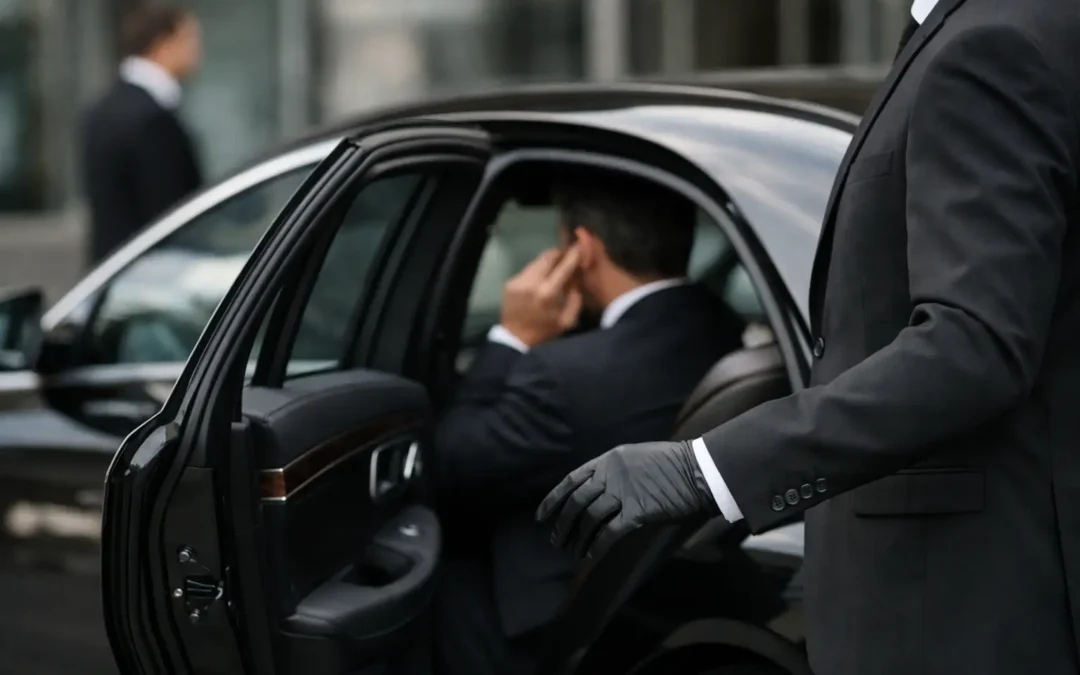
A vehicle can be impeccably appointed and still fail the privacy test. For executives, VIPs, private aviation travelers, and the teams who support them, what makes chauffeur service discreet is not simply tinted glass or a driver who speaks softly. It is a disciplined operating standard that protects the client, the itinerary, and the purpose of the journey without requiring attention or explanation.
Discretion is felt in the details: a chauffeur who recognizes when not to engage, a dispatch team that shares information only on a need-to-know basis, and an arrival that happens precisely where and when it should. The best service makes complex movement appear uncomplicated while keeping personal, corporate, and travel information appropriately contained.
Discretion Begins Before the Vehicle Arrives
A discreet chauffeur service starts well before pickup. Reservations often contain sensitive information: executive names, flight details, residential addresses, FBO locations, meeting venues, security instructions, and changes to a tightly managed schedule. Handling that information with care is foundational, not an added benefit.
This means service teams should use clear communication channels, limit unnecessary circulation of trip details, and verify instructions without drawing attention to the traveler. An executive assistant may need confirmation that the vehicle is staged. The executive does not need repeated calls or messages while preparing for a board meeting, stepping off an aircraft, or attending a private function.
Operational restraint matters here. A professional transportation partner does not treat a high-profile passenger as a story, a status symbol, or an opportunity for attention. The itinerary is a responsibility to execute.
Need-to-Know Coordination
Discreet service is not silent service. It depends on accurate, timely coordination among the people responsible for the trip, including the traveler, assistant, security contact, flight department, event planner, or concierge. The distinction is that communication is purposeful.
For example, a delayed private flight may require the chauffeur to remain positioned near the FBO, dispatch to adjust the service window, and the destination team to be informed of the revised arrival time. Those updates should move efficiently behind the scenes. The traveler should encounter a calm, prepared arrival rather than a visible scramble.
The Chauffeur Is Trained to Read the Room
The chauffeur is the most visible representative of a discreet service, and their judgment is as important as their driving ability. A polished appearance, punctual arrival, and knowledge of the route are expected. The higher standard is the ability to recognize the appropriate level of interaction.
Some clients prefer a brief greeting and a quiet cabin. Others may need confirmation of the next stop, assistance with luggage, or practical local guidance. A professional chauffeur follows the client’s cues while remaining attentive and available. Conversation is never forced, and personal questions are never part of the service.
Discretion also calls for composure under pressure. A sudden location change, an unexpected additional passenger, a security request, or a difficult airport departure should be handled with measured confidence. The client should not have to manage the driver, repeat known preferences, or absorb operational concerns that belong to the transportation team.
Professional Boundaries Protect Privacy
True discretion includes firm professional boundaries. Chauffeurs do not discuss passengers with other clients, venue staff, friends, or colleagues. They do not seek photographs, signatures, social media content, or informal introductions. They avoid identifying a passenger aloud in a public setting unless required for a secure, verified handoff.
At airports, hotels, and event venues, this may mean using a prearranged meeting process rather than holding conspicuous signage. At a private residence or corporate headquarters, it means arriving without fanfare and waiting in the agreed location. The approach should suit the environment and the client’s profile.
The Vehicle Should Feel Private, Not Performative
Vehicle selection contributes to confidentiality, but discretion is more than choosing a dark luxury sedan or SUV. The right vehicle is clean, well maintained, spacious enough for the party and luggage, and appropriate for the setting. Its presence should support the client’s needs without becoming a spectacle.
Inside the cabin, privacy is protected through a controlled environment. Calls, confidential discussions, and last-minute meeting preparation are common during executive travel. A chauffeur should maintain a quiet, comfortable cabin and avoid unnecessary interruptions. The vehicle should be prepared for productivity and rest, not programmed around generic hospitality gestures that may distract from the passenger’s priorities.
There are trade-offs. A larger executive SUV may offer greater room, elevated visibility, and practical utility for luggage or security personnel, but a sedan can be less conspicuous for a solo executive traveling between meetings. For group movements, coordinated vehicles may be preferable to an oversized, highly visible motorcade. The right choice depends on the itinerary, the market, the passenger count, and the desired profile.
Route Planning Is Part of Confidentiality
A chauffeur service becomes discreet through preparation on the road as well. Route planning is not merely about finding the fastest journey. It considers secure entry points, venue access restrictions, traffic patterns, flight arrival timing, alternate routes, and the client’s tolerance for visibility.
For a corporate roadshow, punctuality may be the priority because one delayed meeting can affect an entire day of investor appointments. For a private aviation transfer, the priority may be a controlled arrival at the appropriate FBO entrance. For a VIP attending a public event, the service may require coordination with venue management or security to minimize exposure during pickup and departure.
That preparation must remain flexible. Traffic disruptions, delayed aircraft, weather, and schedule changes are part of executive travel. A capable chauffeur and dispatch operation anticipate alternatives without turning every adjustment into a decision the passenger must make. This is where 24/7 support and local market knowledge make a material difference.
Technology Must Support Privacy, Not Undermine It
Modern transportation requires technology for booking, flight monitoring, chauffeur dispatch, and traveler updates. Used properly, these tools improve accountability and response times. Used carelessly, they can expose unnecessary detail or create a trail of intrusive notifications.
A discreet provider uses technology with restraint. Location tracking and trip updates should serve the client’s authorized stakeholders, not become broadly available information. Confirmation messages should be concise. Driver details should be shared through appropriate channels. Records should be managed with the same seriousness as other elements of executive travel administration.
Clients should also recognize that discretion is a partnership. If several internal teams, third-party planners, or guests receive itinerary details, even the strongest transportation protocol has limits. A well-managed service can advise on the most practical communication structure and honor designated points of contact.
Consistency Is What Makes Chauffeur Service Discreet at Scale
It is relatively easy to deliver privacy on one familiar route with one known chauffeur. The real test is maintaining the same standard across cities, airports, time zones, and changing itineraries. A traveler who lands in New York, continues to London, and arrives for meetings in Los Angeles should not have to reset expectations at every destination.
That consistency requires vetted chauffeurs, clear service standards, reliable dispatch oversight, and a global network that understands the difference between luxury presentation and executive-grade execution. MLR Worldwide Service approaches each journey as a managed mobility assignment, coordinating the operational details that allow clients to move with confidence and without unnecessary visibility.
For executive assistants and travel coordinators, consistency also reduces administrative friction. The provider should retain legitimate preferences, follow approved protocols, and adapt when a principal’s schedule changes. At the same time, it should avoid overfamiliarity. Personalization should feel considered, never intrusive.
Choosing a Discreet Chauffeur Partner
When evaluating a provider, look beyond the vehicle images and service promises. Ask how traveler and itinerary information is handled, who receives trip updates, and how chauffeurs are selected and trained. Clarify the process for FBO pickups, private residences, security coordination, and last-minute changes.
It is also reasonable to ask how the provider handles exceptions. A discreet service is not defined by a perfect day alone. It is defined by what happens when an aircraft diverts, a meeting runs late, or the pickup point changes with little notice. Calm recovery, accurate communication, and an appropriately positioned vehicle often reveal more than any brochure can.
The most valuable chauffeur service does not announce its discretion. It demonstrates it through thoughtful preparation, professional restraint, and the confidence that every detail will remain where it belongs: in capable hands.