
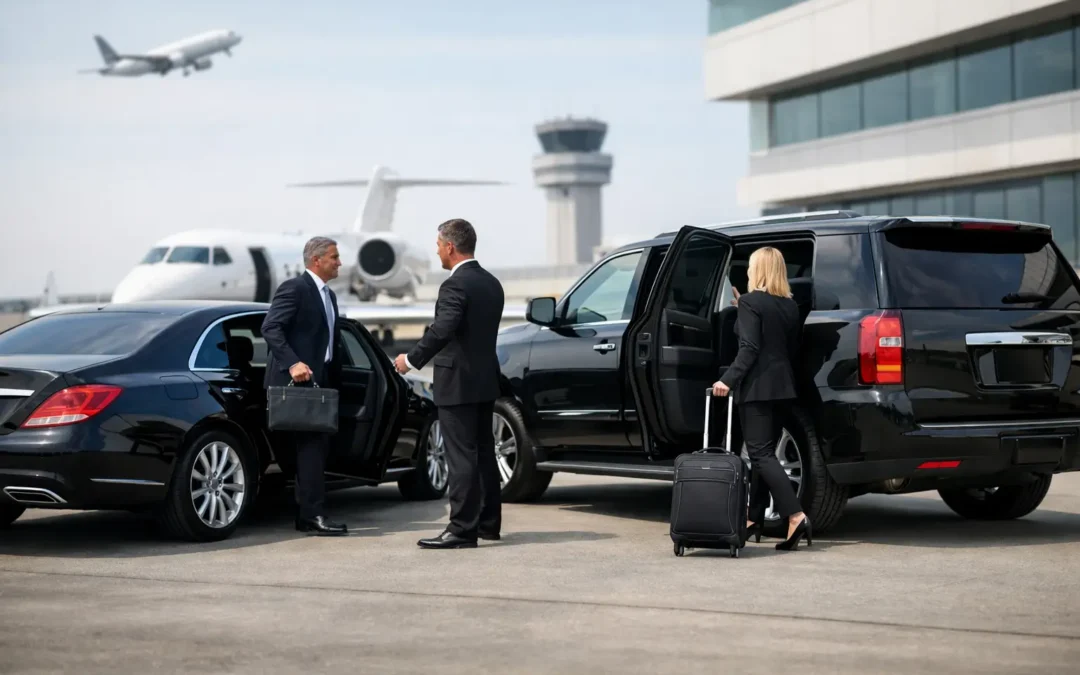
A sedan or SUV airport transfer is not a minor booking detail when the traveler is arriving from an overnight flight, heading directly to a board meeting, or connecting through a private terminal on a tightly managed schedule. The right vehicle protects more than comfort. It protects time, privacy, presentation, and the ability to proceed without operational distractions.
For executive assistants, travel managers, and private clients, the decision should be based on the full movement of the day, not simply passenger count. A premium sedan offers a composed, discreet environment for an individual traveler or pair. An executive SUV provides additional space, flexibility, and presence when luggage, security considerations, or multiple passengers change the equation. Both can deliver an exceptional airport experience when selected for the right circumstances.
Sedan or SUV Airport Transfer: Start With the Itinerary
The vehicle should reflect what happens before and after the airport pickup. A traveler flying into an FBO with one carry-on and a direct transfer to a downtown office has very different requirements from a family arriving internationally with several checked bags, or a principal traveling with an assistant and close-protection personnel.
Begin with four practical questions: How many people are traveling? What luggage or equipment is accompanying them? Does the traveler need a quiet space to work or decompress? Are there further stops, additional passengers, or last-minute schedule changes expected after arrival?
A sedan is often the preferred choice when the itinerary is direct and controlled. It offers an understated arrival, easy curbside access, and a cabin that feels intentionally private. For a solo executive, a luxury sedan creates the appropriate setting for reviewing notes, taking a confidential call, or simply arriving collected after a long flight.
An SUV becomes the stronger choice when the itinerary carries more variables. It accommodates additional bags without crowding the cabin, offers easier access for multiple passengers, and provides greater flexibility when a flight team, family members, or assistants are part of the movement. The best choice is not the largest vehicle by default. It is the vehicle that removes friction from the day.
When a Luxury Sedan Is the Better Choice
For many executive airport transfers, the sedan remains the most refined answer. Its lower profile is ideal for travelers who value discretion and do not need excess capacity. It also makes sense for airport-to-office transfers in dense urban areas, where curb access, parking restrictions, and traffic flow can favor a more compact executive vehicle.
A sedan is particularly well suited to one or two passengers with standard luggage. The cabin is designed around focused comfort rather than group utility. A senior executive arriving for a negotiation, investor meeting, or private dinner may prefer the calm of a sedan because it supports a more composed transition between air travel and the next engagement.
There is also a matter of appearance. In certain corporate and hospitality settings, a premium sedan communicates confidence without drawing unnecessary attention. It is polished, professional, and appropriate for clients who place a premium on low-profile service.
The limitation is straightforward: luggage capacity. Two travelers with large checked bags, garment bags, golf equipment, trade-show materials, or extended-stay luggage can quickly exceed what is practical. A sedan may still accommodate the passengers comfortably, but forcing baggage into an unsuitable configuration is not white-glove service. It creates avoidable handling issues at exactly the moment the traveler expects everything to be in order.
Best-fit sedan scenarios
A luxury sedan is usually the right selection for a solo principal, a traveling executive and spouse, or two colleagues arriving with light-to-standard luggage. It is also an excellent option for private aviation arrivals where the route is direct and the passenger’s needs are known in advance.
When an Executive SUV Adds Real Value
An SUV is not simply a larger sedan. For airport transportation, it is a practical response to complexity. The additional cargo room supports travelers carrying multiple cases, bulky personal items, presentation materials, or equipment that must remain secure and accessible. It also allows passengers to sit comfortably without compromising the cabin for luggage.
For corporate groups, an SUV offers useful flexibility. Three passengers may prefer an SUV even with modest baggage because it provides more personal space after a long flight. When an executive is accompanied by an assistant, family member, or security professional, the vehicle gives the party room to travel together while maintaining a professional environment.
Weather and route conditions may also influence the decision. In markets where heavy rain, snow, uneven access roads, or remote private aviation facilities are possible, an SUV can provide greater confidence and convenience. This does not mean an SUV is required for every poor-weather transfer. It means the transportation plan should account for conditions that may affect passenger comfort, access, and timing.
An SUV can also be the preferred choice for a principal who values a higher seating position or requires easier entry and exit. These details matter, particularly after a long-haul flight or when mobility considerations are part of the traveler profile.
The trade-off is subtle but worth considering. A large SUV can feel less discreet than a sedan in some settings and may be less convenient in tightly constrained city-center locations. For a single executive traveling light, the extra capacity may add little value. Vehicle selection should remain intentional, not automatic.
Luggage Is the Deciding Detail More Often Than Expected
The most common transfer mismatch is not passenger seating. It is baggage. Travel coordinators should consider both the number and type of items being carried. Two standard suitcases do not occupy the same space as two oversized cases, hard-shell sample trunks, ski bags, garment bags, or a folding stroller.
International arrivals often create more luggage demand than domestic point-to-point travel. A client returning from a multi-city business trip may have additional purchases, documents, or equipment that were not present on departure. Private aviation travelers can also carry irregularly sized items that require advance planning.
The most reliable approach is to confirm luggage details during booking rather than assume that a vehicle category will work. If capacity is close, choosing the SUV protects the experience. For larger movements, the correct solution may be a dedicated luggage vehicle or a second executive vehicle rather than crowding passengers into a single cabin.
Privacy, Security, and the Arrival Environment
Vehicle choice also affects the quality of the passenger environment. A sedan creates an intimate setting that can be especially appropriate for confidential calls, sensitive discussions, or a quiet period between engagements. An SUV offers more room for a larger traveling party, but privacy planning may require consideration of who is seated where and whether conversations should wait until arrival.
For VIP and security-conscious travel, the transportation plan should consider more than the vehicle itself. Meet-and-greet procedures, terminal or FBO access, driver communication protocols, routing, and contingency planning all contribute to a controlled transfer. The vehicle should support that plan, not be treated as a standalone decision.
A professional chauffeur service will confirm flight details, pickup instructions, passenger preferences, and vehicle requirements before the day of travel. That advance coordination is what allows a chauffeur to be positioned correctly, luggage handling to be anticipated, and adjustments to be managed with discretion when schedules shift.
Make the Choice Before the Flight Lands
Last-minute vehicle changes are sometimes unavoidable, especially when aircraft, passenger counts, or baggage plans change. But most airport transfer complications can be prevented by matching the vehicle to the itinerary at the time of booking. This is where a transportation partner should ask precise questions and offer recommendations rather than leaving the client to guess.
MLR Worldwide Service approaches airport and FBO transportation as a managed executive movement. The focus is not merely on providing a sedan or SUV. It is on ensuring the selected vehicle, chauffeur, pickup process, and route align with the traveler’s schedule, profile, and expectations.
For a quiet, direct transfer with limited luggage, choose the sedan. For added capacity, multiple travelers, variable conditions, or a more demanding arrival plan, select the SUV. The right decision should feel almost invisible to the passenger: the vehicle is waiting, the cabin is prepared, the luggage fits, and the next appointment remains exactly where it belongs – on schedule.