
You're landing in a city you don't know, it's late, the meeting starts early, and one bad curbside pickup can throw off the whole next day. That's where a private car service earns its keep. Not as a luxury add-on, but as a control layer for time, discretion, and risk reduction when executives, family offices, or flight departments can't afford a sloppy handoff.
A real private car service is a pre-booked, professionally managed ground transport system with one accountable provider behind the wheel and behind the dispatch desk. That matters because the value isn't just the car, it's the planning, the vetting, the live coordination, and the person who meets the traveler when plans change. For teams comparing options, this guide on ground transportation basics is a useful companion, but the short version is simple. If you need a ride and don't care who shows up, use an app. If you need the trip to stay controlled when the schedule shifts, use a private car service.
What Private Car Service Really Means Today
A well-run executive trip often looks boring from the outside. The aircraft arrives, the chauffeur is already in position, the luggage moves without friction, and the client gets to the hotel or boardroom without a single call to chase the car. That's not luck. It's a system built to remove small failures before they become schedule damage.
It is a managed service, not a single ride
A private car service is not just a nicer vehicle. It's a pre-arranged transport process with reservations, driver assignment, route planning, and accountability from one provider. That's the difference between a controlled transfer and a random pickup.
The buyer should care about the process first. A polished sedan means nothing if dispatch doesn't track the flight, the chauffeur doesn't know the terminal, or the provider can't handle a last-minute change without breaking the itinerary. In executive travel, the car is the visible part. The product is the handoff.
Practical rule: If the provider can't explain who monitors the job after it's booked, you're not buying a service. You're buying hope.
Who actually needs it
The category is built for people who can't tolerate preventable delays. That includes corporate travel managers, CEO assistants, family offices, FBO coordinators, event planners, and airline operations teams. It also fits high-value personal travel where discretion and reliability matter more than app convenience.
A good provider should make the trip feel predetermined, not improvised. That means the traveler gets met, routed, tracked, and supported by a team that understands the itinerary before the wheels move. For executive teams, the question isn't whether the ride is comfortable. The question is whether the transport process protects the meeting, the flight, and the client relationship.
How Private Car Service Evolved Into a Regulated Industry
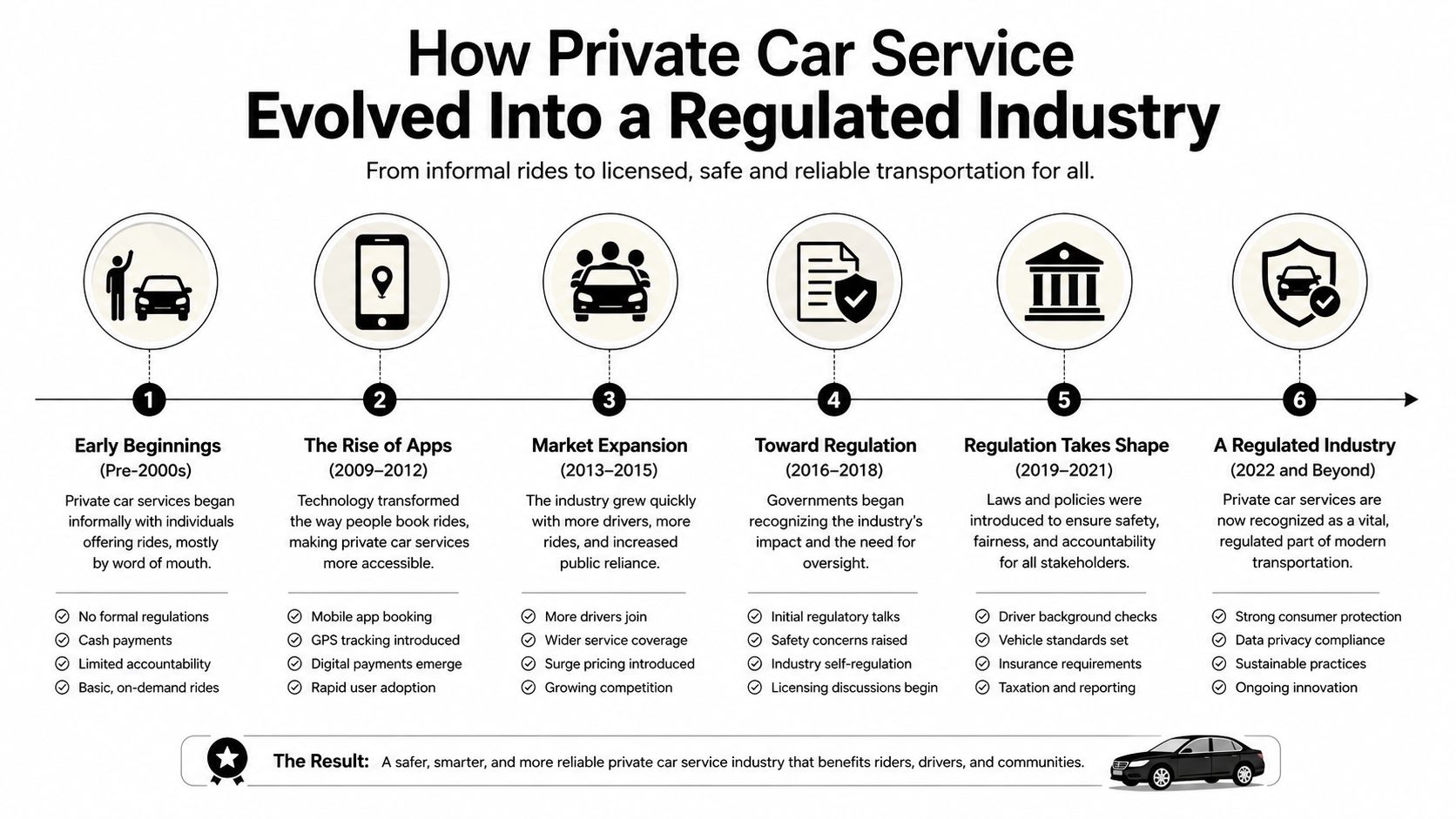
Private hire did not begin as a polished executive product. It began as controlled transport, then slowly turned into regulated transport. Historical summaries say horse-drawn carriages-for-hire were already operating in Paris in 1640, and the first motorized taxi service began in 1897, when Gottlieb Daimler's taxi was delivered to Friedrich Greiner in Stuttgart, marking the world's first motorized taxi company. Later, two-way radios in the late 1940s and computer-assisted dispatching in the 1980s changed how operators coordinated vehicles and served customers, as shown in the evolution of the taxi system.
Why regulation matters to buyers
This history matters because executive transport depends on dispatch discipline, not casual availability. The French formalization makes that clear. By 1 January 2015, chauffeur-driven transport was regulated as Driver-Hired Car Operations and classified as Special Public Transport of Persons (T3P), with companies required to register on a Private driver Operator Registry managed by the Ministry of Ecology, Sustainable Development and Energy, according to the historical account from BreizhCab's private driver history.
That kind of formalization shows the industry moving away from informal luxury and toward an auditable transport category. Buyers should read that as a warning. A provider that cannot explain licensing, operator registration, dispatch oversight, and the way it fits into broader ground transportation companies standards is not operating at the level executives need.
What the old milestones tell you now
The tools changed, but buyer expectations did not. Clients still want punctuality, continuity, and a clean handoff. They expect those outcomes to rest on systems that are more disciplined than anything available in the early days of hired cars.
A reliable provider behaves like an operations desk with cars attached, not a driver with a phone attached.
That is why the right questions are operational, not decorative. Ask who dispatches, how readiness is confirmed, and what happens when the flight plan or meeting schedule changes. Those answers tell you more than chrome, branding, or a glossy website ever will.
Service Types Inside a Modern Private Car Service
A serious provider should not sell every job as the same kind of ride. Different itineraries demand different transport products, and mixing them up causes bad pricing and worse execution. If the provider can't separate a one-way airport transfer from a multi-stop roadshow, they're not managing logistics. They're clipping reservations together.
Executive chauffeur service and airport transfers
Executive chauffeur service is the right fit when the traveler needs flexible, point-to-point movement across meetings, hotel calls, and client visits. It's less about a single transfer and more about preserving the workday. For that kind of booking, MLR Worldwide Service's luxury airport car service is the kind of category most buyers are trying to secure, even if they call it something looser.
Airport transfers and FBO support are different. These jobs hinge on flight timing, curb access, baggage handling, and the ability to absorb a delay without turning the arrival into a scramble. If the pickup window is tight, the provider's dispatch quality matters more than the vehicle badge.
Roadshows, VIP work, and group movement
Corporate roadshows are for itineraries that stack meetings across multiple stops. The vehicle has to stay in rotation, the chauffeur has to stay alert, and the operations team has to keep the schedule fluid without making the traveler manage the chaos.
VIP secure transport is the right tool when privacy and routing control matter as much as comfort. That's common for high-profile principals, sensitive meetings, or travel where visibility itself is a risk. Group and event logistics are different again. You're moving people, not just a person, and the vehicle mix has to match the guest flow, baggage load, and timing pressure.
Match the service to the job
- Use chauffeur service for a principal with back-to-back meetings and no appetite for logistics overhead.
- Use airport or FBO transfers when the flight connection is the part that can't fail.
- Use a roadshow package when the day has multiple stops and timing windows are narrow.
- Use VIP transport when discretion and routing matter.
- Use group logistics when headcount and baggage make a sedan unrealistic.
If you choose the wrong category, you'll overpay or under-prepare. The smart move is to define the job first, then ask the provider to price that specific operational need.
What Separates a Real Provider From a Black-Car Reseller
A black-car reseller can look polished on the surface and still fail when the itinerary gets messy. The key differentiator is not branding, it's control of the operating chain. You want a provider that owns safety, checks vehicles properly, trains chauffeurs, and keeps a live operations desk awake when flights change.
Safety and fleet suitability come first
Some licensing standards are very specific for a reason. In UK local authority guidance, licensed private-hire vehicles may need to be built to M1 specification, have at least four doors, carry a minimum of four average-sized adults in comfort, and be right-hand drive with a wheelbase of at least 100 inches in one published council standard, according to Birmingham City Council vehicle guidance. Those constraints aren't trivia. They shape ingress, cabin comfort, and predictable highway behavior.
Council licensing standards also often require vehicles to meet European Whole Vehicle Type Approval or British National Type Approval, carry at least four passengers and no more than eight, provide 432 mm of personal sitting space per passenger in one cited standard, and have fully operational seat belts, according to this licensing annex. For airport transfers, corporate roadshows, and VIP shuttle work, those are the kind of standards that reduce avoidable friction.
The five criteria buyers should actually use
| Criterion | What to Ask | Red Flag | What Good Looks Like |
|---|---|---|---|
| Licensing and safety | Which licenses and insurance certificates are current? | Vague answers or no documents | Clear proof, sent fast |
| Fleet suitability | Are vehicles matched to passenger count and luggage load? | “We can make it work” | Specific vehicle recommendation |
| Chauffeur quality | How are drivers vetted and trained? | Focus on appearance only | Calm, professional, itinerary-aware drivers |
| Operations capacity | Who tracks flights and changes after booking? | A single driver with no backup | A live dispatch team and escalation path |
| Network reach | Can service stay consistent across cities? | “We'll figure it out locally” | Vetted affiliate coverage and handoff discipline |
What matters most
For most executive buyers, chauffeur training and live operations capacity outrank fleet flash. A luxury badge doesn't help if the chauffeur doesn't know the terminal or the provider can't reassign a trip at midnight. A decent vehicle with disciplined operations beats a flashy car backed by weak control.
Decision rule: choose the provider that can explain its backup plan without sounding defensive.
Pricing, Contracts, and How Costs Actually Work
Pricing gets messy fast when the provider hides the operating model behind vague language. Executive buyers should expect three basic structures, and each one works only when it matches the itinerary. If the quote doesn't clearly tie the price to the mission, the final invoice will do that for you.
The three pricing models that matter
A flat airport transfer is appropriate when the route is simple and the timing is contained. It's the cleanest option for a point-to-point run, especially when the traveler doesn't want surprises.
An hourly charter works when the schedule is fluid. It gives the client control over meetings running long, extra stops, or a sudden route change without reopening the booking every time the day shifts.
A multi-day roadshow package is the right tool when the itinerary spans several cities or several demanding days. In those cases, bundling the movement as a coordinated assignment usually makes more sense than treating each transfer as a separate event. The point is operational continuity, not just transportation.
Two scenarios that show the difference
A corporate roadshow with multiple cities should not be priced like a stack of disconnected point-to-point rides. The traveler needs the same chauffeur logic, the same ops oversight, and the same schedule discipline across the whole sequence. That is exactly where a packaged approach wins on simplicity and control.
A private aviation client with a last-minute reroute should not be trapped in metered thinking. The value of a flat hourly rate is that the provider can absorb route movement, waiting time, and reordering without turning every change into a new transaction.
Contracts should protect the traveler, not just the vendor
Travel managers and family offices should look for SLA language, background check standards, insurance certificates, data handling terms, and substitution policies. If the provider can swap vehicles or chauffeurs, the contract should say how that happens and who approves it.
The actual cost isn't just the ride price. It's the risk of an untracked substitution, the hassle of unclear cancellation terms, and the time lost when the provider treats changes as exceptions instead of part of the job.
Booking, Operations, and the 24/7 Concierge Workflow
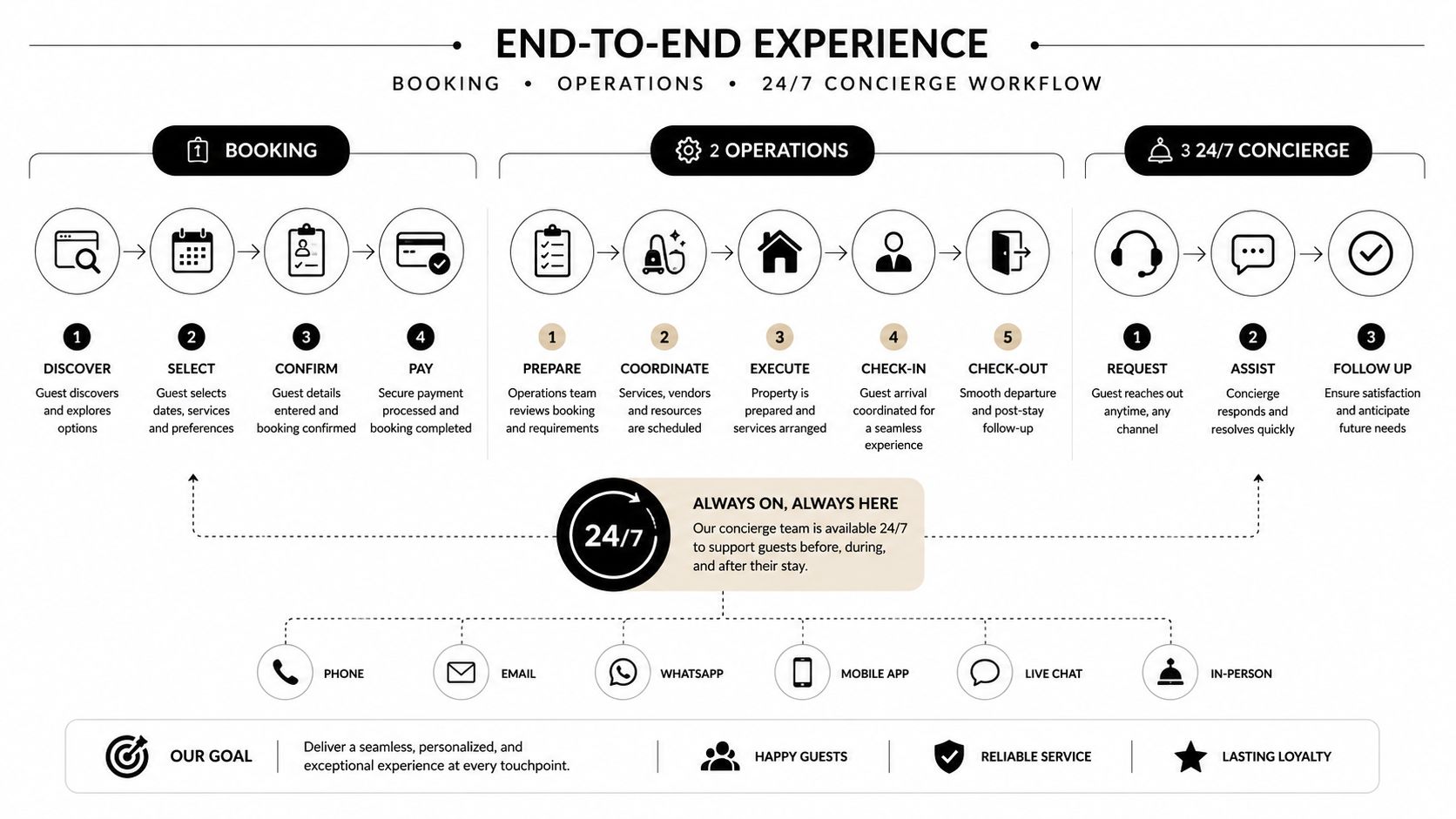
The best private transport teams don't wait for problems to arrive at the curb. They build the trip around flight data, itinerary notes, and a clear escalation path before the traveler ever steps outside. That's what separates a true concierge workflow from a standard booking.
What happens before pickup
The process should start with the itinerary, not the vehicle. The operations team reviews dates, terminals, meeting addresses, passenger count, luggage load, and any special handling notes. Then the chauffeur gets assigned, the vehicle is checked, and the provider confirms the job against the live schedule.
That matters because the first failure in executive transport is usually not dramatic. It's small. A wrong terminal. A missed gate note. A driver who knows the airport but not the client's real timing pressure.
What happens during the trip
A live operations desk should track the move, monitor changes, and reroute when needed. That's the difference between a static reservation and a managed trip. It's also why a global affiliate network matters. A Chicago-based principal should not have to reset expectations every time the trip jumps to London, Dubai, or Tokyo.
MLR Worldwide Service is built around that model, with a 24/7 concierge operations team and a vetted global affiliate network across major business hubs. That kind of setup is the only rational answer for multi-stop international travel where one delay can spill into the rest of the day.
Why the traditional model falls short
A conventional booking often ends at confirmation. After that, one driver is expected to solve everything alone. That works for simple local trips. It fails on roadshows, flight disruptions, and high-profile itineraries where the traveler expects someone else to absorb the chaos.
The provider you want is the one that answers the phone before the principal has to ask twice.
If the service can't monitor, reroute, and communicate in real time, it's not a premium operation. It's a reservation with a nicer name.
Choosing the Right Provider and Getting Started
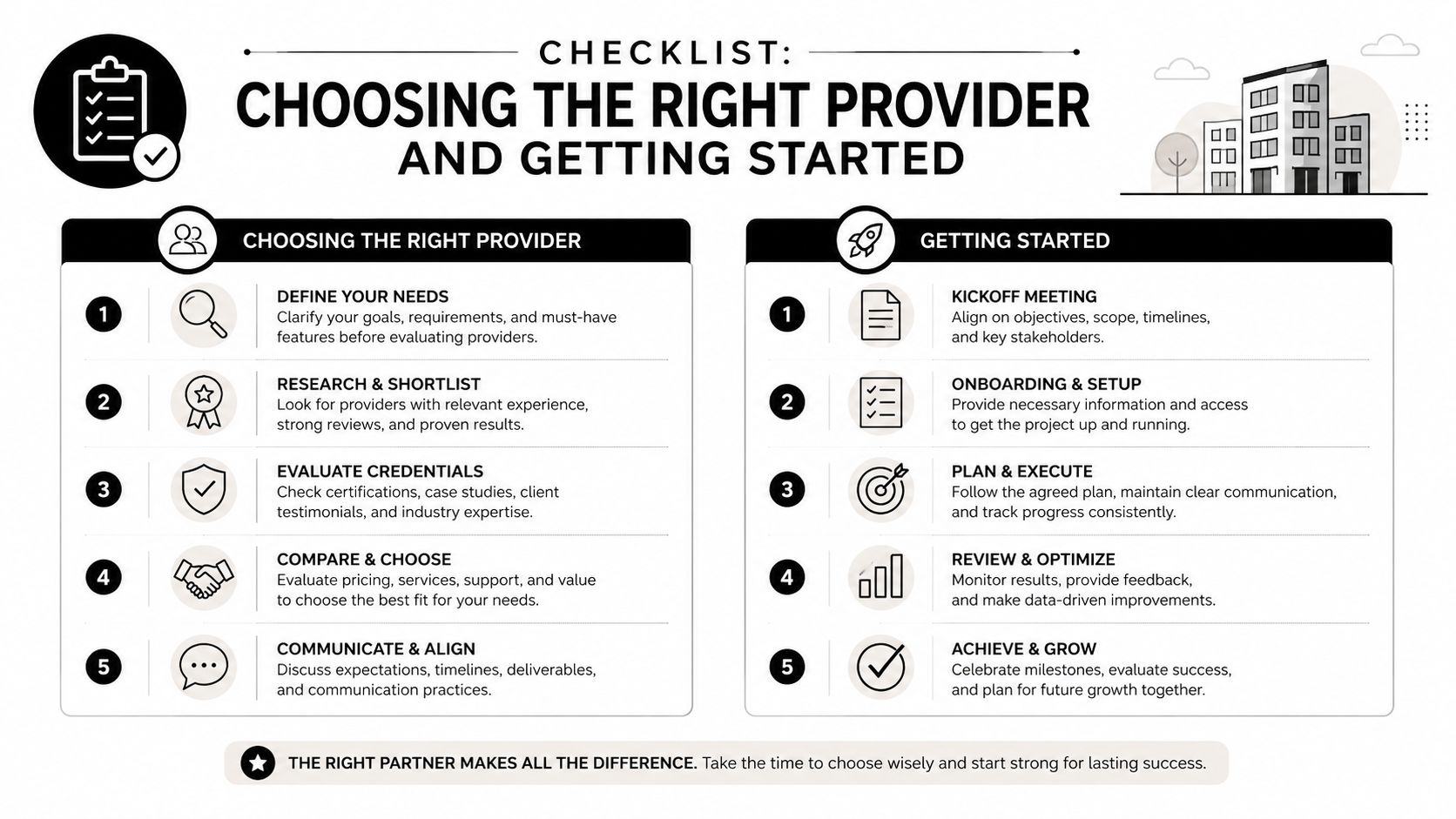
The buyer who gets this right asks sharp questions before the first trip is booked. Not because the market is full of bad actors, but because the gap between a decent car and a dependable operation is where most travel risk hides. You want a provider that can prove it knows how executives move.
The eight questions to ask
- Licensing: What licenses and local permits do you hold for the cities we use?
- Insurance: Can you send current insurance certificates before booking?
- Chauffeur vetting: How do you screen, train, and review your drivers?
- Fleet spec: Which vehicles fit our passenger count, luggage, and comfort needs?
- Live coverage: Do you have real people on duty outside normal business hours?
- Global reach: How do you handle cross-border trips and affiliate handoffs?
- Account setup: How fast can you build a corporate or family office profile?
- References: Can you share examples from clients with similar travel patterns?
A weak provider will dodge the document questions and talk mostly about amenities. A real provider will answer operational questions without trying to perform. That's the difference.
How a serious buyer should think about MLR Worldwide Service
MLR Worldwide Service fits the profile of a provider you'd evaluate against that checklist. It offers executive chauffeur services, airport transfers and FBO support, corporate roadshows, event and group logistics, VIP secure transport, and airline crew movements, with a 24/7 concierge operations team, a curated fleet of late-model executive sedans, premium SUVs, luxury vans, and specialty vehicles, and a vetted global affiliate network across cities such as New York, London, Dubai, and Tokyo. Headquartered in Chicago, it presents the kind of accountable operating structure buyers should expect from a serious private car service.
The point is not to buy the marketing. The point is to test whether the provider can hold the schedule together when the day stops behaving. If they can, you've got a transportation partner. If they can't, keep looking.
Questions Buyers Ask Before They Book
How far ahead should you book? For a single airport transfer, sooner is better, but the bigger the itinerary, the earlier you should lock it in. Roadshows, multi-stop days, and group moves need more lead time because vehicle assignment and coordination matter.
How does global coverage work across time zones? It should mean one standard of service, backed by local execution through the provider's network, not a fresh search each time the trip crosses borders.
How do you set up an account? Send the traveler profiles, billing contacts, billing rules, and common trip patterns up front. That keeps future bookings faster and reduces friction on repeat trips.
What about cancellations or rebooking when a flight moves? Ask before you sign. The provider should explain the cutoff rules and how changes are handled so you're not negotiating under pressure at the curb.
If you want a private car service that treats transport like an operations function, not a courtesy, start a conversation with MLR Worldwide Service. Ask for the account setup process, the fleet options for your travel pattern, and the live support model before you book the first trip.