
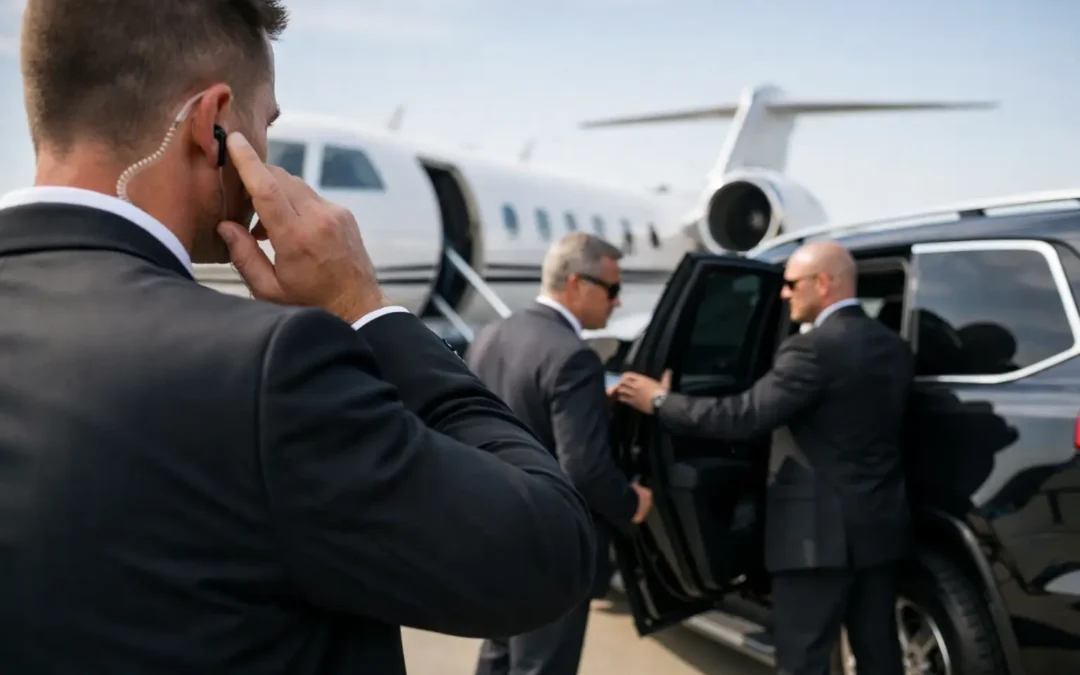
A delayed pickup is inconvenient. A poorly planned secure movement for a principal, board member, or high-profile guest can create exposure that no executive team wants to explain later. That is why executive protection transportation is not simply a higher-end car service. It is a disciplined approach to moving people safely, discreetly, and on schedule when the stakes are higher than usual.
For corporate leaders, family offices, private aviation travelers, and the teams who support them, transportation decisions often sit at the intersection of security, reputation, and time management. The vehicle matters, but the real value comes from planning, communication, route intelligence, chauffeur readiness, and the ability to adapt without creating friction for the passenger. When done properly, the experience feels calm and effortless. Behind that calm is a great deal of operational control.
What executive protection transportation actually means
Executive protection transportation refers to secure, professionally managed ground movement designed for individuals who may face elevated risk, public visibility, confidentiality concerns, or unusually complex itineraries. In practice, it combines premium chauffeur service with protection-minded logistics.
That distinction matters. A standard luxury transfer focuses on comfort, punctuality, and presentation. Executive protection transportation adds another layer – threat awareness, controlled routing, secure pickup and drop-off procedures, and close coordination with assistants, security personnel, aviation teams, venue staff, or corporate stakeholders.
Not every executive requires a full protective detail. In many cases, the need is more nuanced. A CEO traveling during a sensitive transaction, a public-facing principal attending a high-profile event, or a private client arriving through an FBO may not want an overt security footprint. They still need privacy, disciplined service, and a transportation partner that understands how to reduce attention rather than attract it.
Why transportation becomes a security issue
Risk in ground travel rarely comes from one dramatic event. More often, it builds through small failures: an exposed curbside wait, an inexperienced chauffeur, a route that ignores traffic disruptions, a vehicle that is not positioned correctly, or a support team that is unaware of schedule changes. These gaps create predictability, delay, and unnecessary visibility.
For executive travelers, exposure is not only physical. It can also involve confidentiality, optics, and business continuity. Being seen in the wrong place, arriving late to a board meeting, or having travel details discussed too openly can have consequences well beyond inconvenience.
This is where service standards and protection standards begin to overlap. A secure transportation program protects time, information, movement, and personal comfort at once. It treats the journey as part of the executive environment, not as a break between important moments.
The core elements of executive protection transportation
At the center of this service is advance planning. Pickup points, access restrictions, alternates, estimated travel times, passenger preferences, and communication protocols should be confirmed before wheels move. The best operations teams account for airport congestion, FBO procedures, hotel access, event security perimeters, and local traffic patterns without requiring the client to manage those variables personally.
Vehicle selection also carries operational significance. The right sedan or SUV should align with the principal’s profile, the location, the expected visibility, and the level of luggage or accompanying staff. In some settings, a discreet executive sedan is preferable because it blends in. In others, a larger SUV is more practical for security support, equipment, or urban maneuvering conditions. Luxury is expected, but appropriateness matters more than display.
The chauffeur’s role is equally important. In this environment, a chauffeur is not simply driving. They are maintaining situational awareness, protecting confidentiality, managing timing precisely, and supporting a composed passenger experience. Professional appearance and polished etiquette are essential, but so are calm judgment, route discipline, and the ability to respond to last-minute changes without hesitation.
Communication must remain controlled and concise. The principal should never feel surrounded by chatter, confusion, or conflicting updates. Executive assistants and travel managers need confidence that changes will be absorbed accurately and acted on immediately. That requires a support structure operating in the background, often around the clock.
Executive protection transportation in real-world scenarios
The need for this level of service appears in a wide range of settings. A multinational executive on a multi-city roadshow may require movements coordinated to the minute, with venue transitions, staggered arrivals, and no room for missed timing. A private aviation client may need discreet tarmac-side handling paired with direct onward travel that limits waiting and preserves privacy.
Event environments create another set of demands. Red-carpet arrivals, shareholder meetings, political-adjacent gatherings, and invitation-only functions often involve controlled access, media presence, and shifting security perimeters. In these cases, transportation has to work in lockstep with event operations. A polished vehicle means little if the arrival sequence is poorly timed.
There are also lower-visibility use cases that still warrant elevated care. Sensitive legal meetings, medical travel, family office movements, and executive arrivals during labor disputes or corporate transitions may call for protection-minded transportation without any visible security theater. Quiet competence is usually the better answer.
What sophisticated clients should expect from a provider
A credible provider should be able to think beyond the ride itself. That means understanding itinerary complexity, protecting confidentiality at every touchpoint, and managing details with white-glove service from booking through final drop-off. Precision matters before the pickup as much as during it.
Clients should expect vetted chauffeurs, properly maintained late-model vehicles, and consistent operating standards across cities. They should also expect discretion in language, billing, communications, and on-site conduct. In executive travel, trust can be weakened by surprisingly small missteps.
Global capability is another meaningful differentiator. Many providers can execute well in one city. Fewer can deliver the same standards across multiple destinations while coordinating local affiliates, airport procedures, and changing schedules with the same level of control. For organizations managing travel at scale, consistency is not a luxury. It is part of risk management.
Where the trade-offs are
Not every movement requires the same posture, and overcorrecting can be counterproductive. A highly visible security approach may be appropriate for a specific principal or threat environment, but it can also draw attention in situations where discretion is the priority. Likewise, the most armored or conspicuous vehicle is not always the most suitable choice for urban business travel.
There is also a balance between flexibility and structure. Executive schedules change, sometimes with little notice. A strong transportation partner accommodates those changes, but that flexibility still depends on disciplined operations. Last-minute requests are manageable when the service model is prepared for them, not when improvisation replaces planning.
Budget enters the conversation as well, though for most high-value travelers it is not the primary filter. The real question is what level of service protects the principal’s time, privacy, and exposure most effectively. Choosing on price alone often ignores the operational difference between a premium car and a professionally managed movement strategy.
Why experience matters more than branding
Many companies can describe themselves as luxury transportation providers. Fewer understand the expectations attached to executive movement where privacy, timing, and protection all carry weight. Experience shows up in the details: how arrivals are staged, how information is handled, how a change in terminal or venue access is absorbed, and how calm the entire process feels to the passenger.
This is why sophisticated clients tend to value a transportation partner that operates like an extension of their office, household, or security team. The service should be polished, but never performative. Responsive, but never chaotic. Protective, but never intrusive.
For organizations and individuals who cannot afford transportation failures, executive protection transportation is best understood as a discipline of controlled mobility. It preserves freedom of movement while reducing avoidable exposure. When the provider gets it right, the traveler notices very little – and that is often the clearest sign of excellence.
MLR Worldwide Service approaches this category with that standard in mind: discreet execution, global consistency, and the kind of operational confidence that allows executives and their teams to stay focused on the agenda ahead. The right transportation plan should do more than get you there. It should leave nothing to chance.