
Your executive lands early. The board meeting hasn't moved. The assistant wants a clean answer to one question: where is the car?
In traditional ground transportation, that question still triggers too much improvisation. Someone calls dispatch. Dispatch calls the chauffeur. The chauffeur is driving, parked in a holding area, or circling because curb access changed. A second ETA arrives five minutes after the first one, and neither is fully reliable. By the time the passenger is standing on the curb, the problem isn't only delay. It's uncertainty.
That uncertainty is expensive. It drains confidence from executive assistants, travel managers, and security teams. It also creates avoidable exposure when the traveler is high-profile, the itinerary is compressed, or the pickup point is sensitive.
Real-time transportation visibility fixes that problem when it's done properly. Not as a flashy map feature. As an operating discipline that gives the people managing the trip a live, accurate, controlled view of what's happening on the ground.
The High Stakes of Executive Ground Transportation
A missed retail delivery is frustrating. A missed CEO pickup can derail an entire day.
Consider a common scenario. A senior executive arrives from an international flight, clears the terminal faster than expected, and needs to be in a client office shortly after landing. The assistant is coordinating luggage, schedule changes, and a revised first stop. Security wants confirmation that the vehicle is in place. The executive wants to move without waiting in a public area.
Legacy coordination struggles here because it depends on fragments. Scheduled flight time. A chauffeur check-in call from earlier. A dispatcher's best estimate of traffic. None of that gives you a dependable operational picture once conditions change.
Where the old method breaks down
The failure points are usually predictable:
- Static schedules fail first. An itinerary built on planned arrival time becomes outdated as soon as the aircraft lands early, taxis longer than expected, or deplanes from a remote stand.
- Phone-based updates lag reality. By the time one person asks for a status and another person relays it, the answer may already be stale.
- Multiple stakeholders see different versions of the trip. The assistant, dispatcher, chauffeur, and security contact can each be working from different assumptions.
When executive travel goes wrong, the first symptom is usually a bad ETA. The real issue is that nobody shares the same live operating picture.
That's why visibility matters. A professional operation shouldn't need to “find out” where the vehicle is after the passenger calls. It should already know. It should know whether the chauffeur is staged, whether traffic conditions changed, and whether the route still supports an on-time arrival to the next stop.
What confidence looks like
In a well-run executive movement, the passenger doesn't feel the machinery behind the service. The assistant doesn't chase updates. The security team doesn't ask for repeated reassurance. Everyone who needs to know has the right information at the right time.
That's the practical promise of real-time transportation visibility in executive travel. It replaces guesswork with control, and it turns a vulnerable handoff between air and ground into a managed transition.
What Is Real-Time Visibility in a VIP Context
In freight, visibility often means tracking a shipment. In executive transport, it means managing a person's movement with precision, discretion, and accountability.
That distinction matters. A package can tolerate a generic status update. A principal moving between an airport, office, residence, FBO, or event venue cannot. In a VIP setting, real-time visibility is less like consumer mapping and more like a private operations console for ground movement.
More than a dot on a map
A simple location ping isn't enough. VIP-grade visibility combines vehicle telemetry, chauffeur status, route conditions, and trip milestones into one controlled view that operations can act on.
The practical output is straightforward:
- a credible ETA that adjusts when conditions change
- proactive communication before a delay becomes visible to the traveler
- controlled escalation if a route, access point, or pickup sequence needs to change
- shared situational awareness across dispatch, assistants, and approved stakeholders
In other words, the value isn't “we can see the car.” The value is “we can manage the trip while it's in motion.”
Legacy Coordination vs Real-Time Visibility Management
| Aspect | Legacy Coordination | Real-Time Visibility |
|---|---|---|
| Trip status | Based on scheduled times and manual updates | Based on live operating data |
| ETA management | Fixed estimate that degrades quickly | Dynamic ETA adjusted to conditions |
| Communication style | Reactive, often after the client asks | Proactive, before the issue reaches the client |
| Dispatcher view | Split across calls, texts, and notes | Unified operational picture |
| Irregular operations | Managed by improvisation | Managed by alerts, rerouting, and controlled communication |
| Client experience | Waiting, uncertainty, repeated check-ins | Predictable handoffs and fewer surprises |
| Security posture | Visibility often shared too loosely | Access controlled to approved participants |
Why VIP travel changes the standard
Executive transport has a different risk profile than ordinary transfers. The passenger may be traveling with sensitive schedules, public visibility, family office oversight, or protective security requirements. In that environment, the job isn't just movement. It's managed movement.
Operational view: The best visibility systems reduce noise, not just increase data. If a platform floods your team with raw locations but doesn't support action, it won't improve service.
That's why experienced operators don't treat real-time transportation visibility as a gadget. They treat it as the backbone of duty of care and service consistency. The trip is no longer managed by isolated check-ins. It's managed from a live, trusted view of reality.
Key Business Benefits Beyond Punctuality
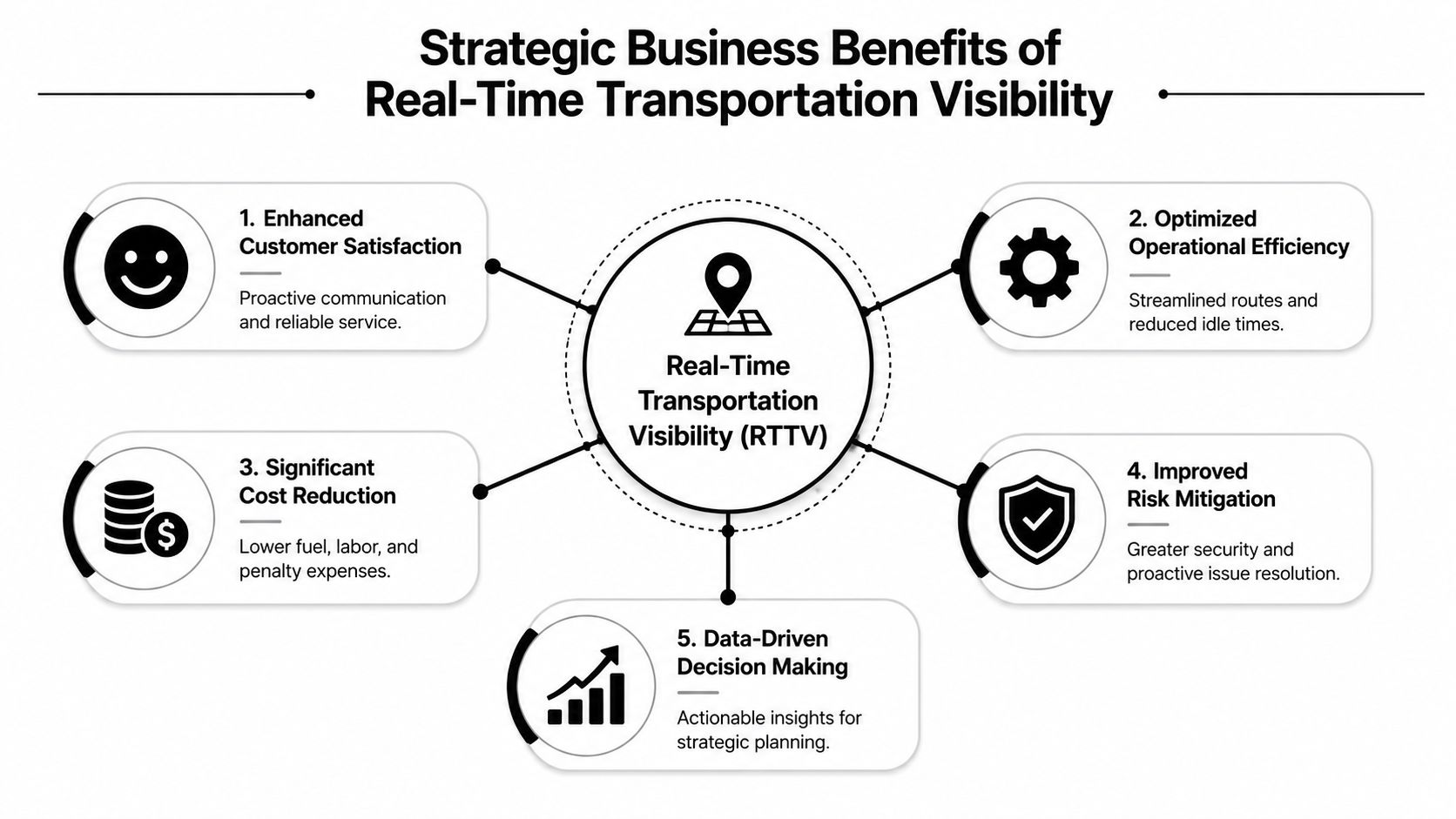
Most buyers first ask about on-time performance. That's reasonable, but it's too narrow. The primary value of real-time transportation visibility shows up in safety oversight, executive efficiency, and the way your organization presents itself when timing matters.
Duty of care becomes provable
Corporate duty of care isn't a slogan. It depends on whether your team can verify where the traveler is in the movement process, whether the assigned vehicle is in place, and whether someone is actively monitoring exceptions.
When weather, congestion, terminal changes, or venue restrictions affect a transfer, a visible operation can intervene early. A blind operation waits for the traveler or assistant to report the problem.
That difference matters most when the principal is senior, time-sensitive, or security-conscious.
Executive productivity improves quietly
Senior leaders rarely complain about ground transport in formal terms. They complain about friction. Waiting at arrivals. Unclear pickup instructions. Last-minute route changes with no explanation. Calls during transitions that should have been handled already.
A strong visibility model removes that friction by tightening the handoff between air and ground and by keeping downstream appointments realistic. If the first meeting needs to move by a few minutes because traffic conditions changed, the assistant can adjust early instead of managing a scramble.
Brand reputation travels with the passenger
Every executive arrival says something about the company behind it. This is especially true during roadshows, investor meetings, board sessions, diplomatic visits, and client entertainment.
A poorly coordinated arrival looks careless. A smooth one signals control.
Consider the contrast:
- Reactive service: the guest waits curbside while internal teams hunt for the vehicle.
- Managed service: the vehicle is positioned correctly, the pickup instructions are clear, and any change is communicated before the guest feels it.
Better decisions for travel managers
Visibility also improves how travel and operations teams evaluate service quality over time. They can spot recurring issues like weak staging practices, poor terminal coordination, or route planning that doesn't reflect actual ground conditions.
Good transport looks simple to the traveler because somebody behind the scenes is managing complexity well.
The result is broader than punctuality. You get a safer traveler experience, less wasted executive time, and a more professional face to clients, investors, and partners.
The Technical Building Blocks of Visibility
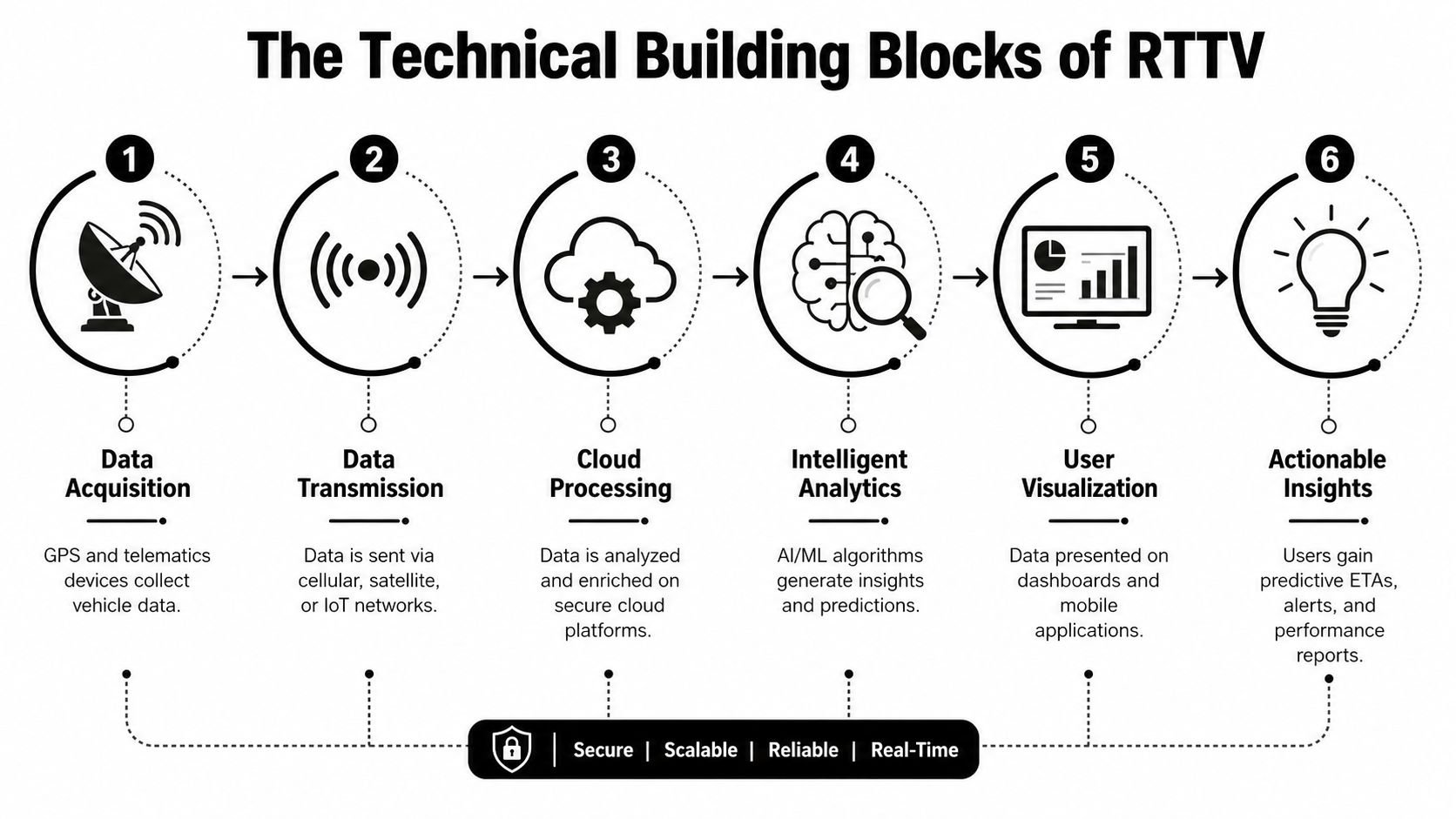
The technology behind real-time transportation visibility is advanced, but the operating logic is simple. Good systems gather signals from multiple sources, clean them up, and present them in one place so an operations team can make decisions quickly.
The data layer
At the vehicle level, the system starts with location and movement data. In practice, that can come from telematics hardware, driver mobile applications, and integrated fleet tools. Those feeds show where the vehicle is, whether it's moving, and how the trip is progressing against the plan.
At the trip level, the platform also needs context. Flight status, airport conditions, traffic patterns, weather inputs, and itinerary updates all affect the usefulness of a raw GPS point. Without context, location data is just motion. With context, it becomes operational intelligence.
The unified operating view
According to Gartner's RTTVP market overview, real-time transportation visibility platforms operate through a unified telemetry layer that ingests streaming data from heterogeneous sources and standardizes location and status signals into a single operational view, achieving sub-minute latency for domestic road modes. Gartner also notes that this architecture supports dynamic ETA recalculations driven by real-time conditions and can reduce disruption response time by up to 40% compared with legacy manual check-call systems.
That architecture is exactly why consumer-grade tracking tools aren't enough for executive transport. A luxury ground movement isn't just about seeing a pin. It's about maintaining one trusted source of truth while multiple variables keep shifting.
The standards that separate enterprise systems from basic apps
A serious platform also needs discipline around data quality and security. Gartner's same market guidance identifies more than 98% completeness, less than 2% accuracy error rates, TLS 1.3+ in transit, AES-256 at rest, and SOC 2 compliance as enterprise-grade baselines for deployment in this category.
Those details matter because executive transport has no tolerance for sloppy data. If a chauffeur appears to be in the wrong place because the signal is poor, or if a status feed updates too slowly to support a pickup decision, the platform creates confusion instead of control.
For travel programs evaluating adjacent capabilities, it's worth looking at how visibility connects with real-time route optimization for executive ground operations. Routing and visibility are separate functions, but they work best when they inform each other.
What actually works
The strongest technical setups share a few traits:
- Clean integrations: flight, vehicle, and dispatch data land in one environment instead of scattered dashboards.
- Actionable alerts: operations sees exceptions that need intervention, not a flood of meaningless updates.
- Secure sharing controls: assistants and stakeholders receive only the level of visibility appropriate to their role.
The platform matters. The operating model matters just as much.
Operational Best Practices in Action
Technology doesn't rescue a poorly run dispatch floor. It gives a disciplined team better timing, better foresight, and fewer excuses.
A capable operations team uses visibility before the trip, during the trip, and after the trip. Before pickup, they watch the incoming movement and position the chauffeur based on actual conditions rather than the original reservation record. During the trip, they monitor route health, curbside access, and timing to next commitments. After the trip, they review exceptions and tighten the playbook.
How proactive dispatch looks in real life
An executive's flight is scheduled to arrive mid-afternoon. The original chauffeur release time assumes an on-time landing and standard deplaning. Then the aircraft arrives ahead of schedule and reaches the gate quickly.
In a reactive setup, dispatch learns this when the passenger calls from the curb.
In a mature setup, the operations team sees the change, adjusts staging, confirms pickup instructions, and ensures the vehicle is positioned before the traveler emerges. The passenger experiences continuity rather than recovery.
Exception handling is the real test
Smooth trips don't prove much. Disruptions do.
Suppose a major route incident blocks the preferred path from the airport to a downtown meeting. The right response isn't just rerouting the driver. It's updating the ETA, validating the alternate access point, informing the assistant, and protecting the downstream schedule with enough notice to make useful decisions.
That workflow often includes:
- Detecting the exception early through live monitoring.
- Choosing the operational response based on pickup point, traffic exposure, and client priorities.
- Communicating with precision to the people who need to know, without creating unnecessary noise.
- Confirming execution so the revised plan is carried out on the ground.
The best operations teams don't wait for the traveler to discover a problem. They solve it while the traveler is still moving toward the vehicle.
Service standards need evidence
Executive transport providers often promise punctuality, professionalism, and responsiveness. Visibility lets clients ask the right follow-up question: can you prove it?
Travel managers should expect a provider to monitor core service moments such as chauffeur staging, pickup timing, route adherence, and milestone completion. They should also expect the provider to investigate recurring exceptions instead of treating every issue as random.
What sophisticated clients should ask
When reviewing a provider's operating maturity, ask questions that reveal process, not branding:
- Who monitors active trips after hours and across time zones?
- How are airport arrivals handled when actual conditions differ from the booked itinerary?
- What triggers an exception alert inside your dispatch environment?
- How do you communicate changes to assistants, security teams, or on-site coordinators?
A provider that answers clearly is usually operating from a real system. A provider that answers vaguely is usually relying on people to compensate for weak visibility.
Privacy and Security for High-Profile Clients
Most visibility marketing assumes that more sharing is better. In VIP transport, that assumption can be dangerous.
For a public company executive, family office principal, celebrity, diplomat, or private aviation passenger, visibility must be controlled. The right people need situational awareness. The wrong people should learn nothing.

Public tracking is the wrong default
A fundamental difference emerges in executive transport compared to mainstream freight technology. As noted in MacroPoint's discussion of RTTVP providers, 68% of corporate travel managers prioritize discreet visibility over public tracking in VIP logistics, yet 92% of RTTVP marketing still highlights public map interfaces. That gap matters because high-security travelers need visibility without exposure.
A public-facing map link might be acceptable for ordinary logistics. It's a poor fit for a principal whose movements should remain confidential.
What discreet visibility actually means
Discreet visibility isn't secrecy for its own sake. It's controlled access designed around operational need.
In practice, that usually includes:
- Non-public tracking access: status is shared through controlled channels rather than broad, open links.
- Role-based permissions: assistants, security personnel, event coordinators, and internal stakeholders don't all need the same level of detail.
- Limited data exposure: users see what they need for the trip, not a permanent record of patterns or sensitive locations.
A security-minded operation also limits who inside the transport provider can access live trip data. Not every dispatcher, affiliate, or chauffeur needs full visibility into every principal movement.
Digital discretion matters as much as physical discretion
Clients often evaluate chauffeurs on presence, route knowledge, and confidentiality. They should also evaluate the provider's digital habits.
That means asking whether trip data is encrypted, how long access persists, who can forward or screenshot tracking details, and how exceptions are escalated without over-sharing the itinerary. It also means training chauffeurs and support staff not to treat tracking tools casually.
For organizations reviewing providers with a stronger protective posture, this guide to secure transport companies for executive and VIP travel is a useful starting point.
Security note: In VIP transport, visibility should narrow exposure, not widen it.
The right balance
Some buyers assume they must choose between privacy and operational awareness. They don't. The better answer is controlled transparency.
A strong executive transport operation gives approved stakeholders enough information to manage timing, handoffs, and contingencies. It withholds the rest. That balance protects the traveler while preserving the responsiveness that real-time transportation visibility is supposed to deliver.
Implementing and Measuring Your ROI
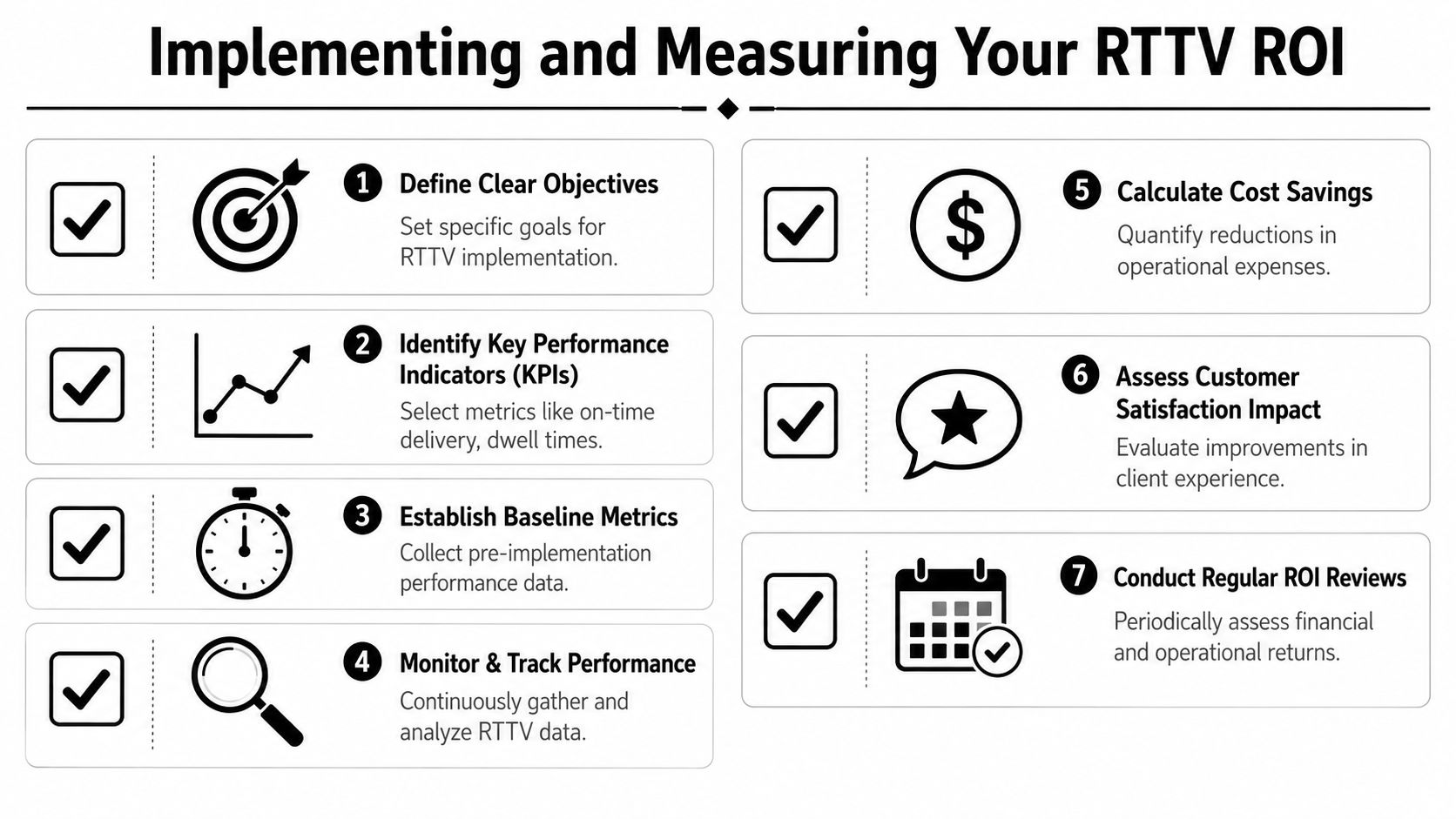
Travel managers don't need a thesis on visibility. They need a way to evaluate whether a provider's system improves service and reduces friction for the people they support.
Start with the right measures
The cleanest way to judge ROI is to focus on operational outcomes you can observe.
Use a scorecard like this:
- On-time execution: Measure whether vehicles are positioned and ready when the traveler needs them, not just whether the reservation was accepted.
- Executive wait time: Track whether senior travelers are standing by unnecessarily at airports, FBOs, hotels, or venues.
- Exception frequency: Review missed pickups, unclear handoffs, late-stage reroutes, and communication breakdowns.
- Communication quality: Ask assistants and travel coordinators whether updates arrive early enough to be useful.
- Security alignment: Confirm whether access to live movement information matches your organization's privacy requirements.
Vet the provider like an operator
A useful implementation checklist is practical, not theoretical.
Ask prospective partners:
- Can your team monitor active trips continuously?
- Do you combine flight status, route conditions, and vehicle data in one operating view?
- How are itinerary changes handled after booking?
- What visibility can be shared with assistants or security contacts, and how is access controlled?
- What happens when a pickup point, terminal flow, or venue entry pattern changes unexpectedly?
Look for managed experience, not just software
A visibility platform on its own won't protect your travelers. A dispatch team without the right tools won't either. The return comes from combining both into a managed service model that reduces uncertainty around every handoff.
If your organization is reviewing broader corporate transportation solutions for executive travel programs, real-time transportation visibility should sit near the top of the evaluation list. It changes transportation from a commodity purchase into a controlled business process.
Done well, it protects time, strengthens duty of care, and gives leadership teams one less operational variable to worry about.
When executive travel has to run without gaps, MLR Worldwide Service delivers the level of precision, discretion, and live operational coordination that corporate leaders, family offices, and travel teams expect. If you need a ground transportation partner that treats visibility as a security and service discipline, not just a tracking feature, MLR is built for that standard.