

So, what exactly is global crew logistics?
In simple terms, it's the complex, behind-the-scenes work of moving airline and maritime crews around the world. It’s far more than just booking flights and hotels. This is a mission-critical operation that ensures pilots and cabin crew are rested, in the right place at the right time, and compliant with a web of international regulations.
Think of it as the invisible backbone of every on-time departure.
The Symphony of Global Crew Logistics
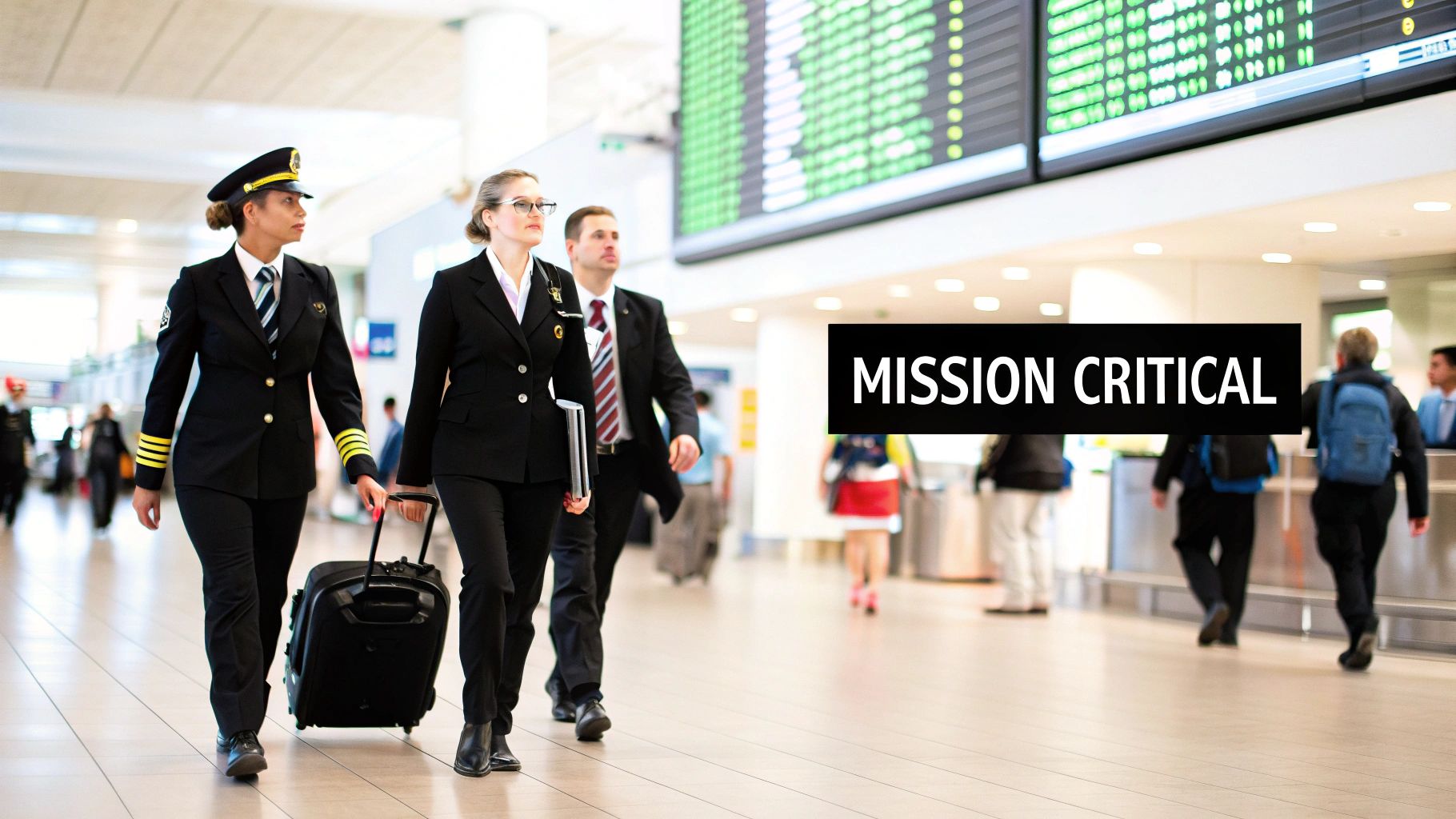
Imagine a world-class symphony orchestra on a global tour. For the show to go on, every single musician has to arrive on time, rested, and ready to perform. Global crew logistics is a lot like that, but the stakes are much, much higher.
If a violinist is late, you might have a bad concert. But if a flight crew is delayed, you could have a multi-million dollar aircraft sitting on the tarmac, triggering a domino effect of canceled flights, stranded passengers, and astronomical costs.
This isn't your average corporate travel department. It’s a high-stakes discipline that pieces together dozens of moving parts into one seamless operation. A single crew rotation might cross three continents, demanding pinpoint planning and the ability to adapt on the fly.
Core Components of Crew Logistics
At its core, crew logistics is all about managing every single detail of a crew's journey on the ground. This frees them up to focus entirely on their job: operating the aircraft safely.
The main responsibilities fall into a few key buckets:
- Ground Transportation: This means arranging reliable, secure transport between airports, private FBOs (Fixed-Base Operators), and hotels, often with very specific security needs.
- Hotel Accommodations: It’s not just about booking a room. It's about finding approved hotels that are safe, quiet, and designed for proper crew rest, all while meeting strict contractual and regulatory guidelines.
- Regulatory Compliance: Every move must align with a maze of international and local laws on duty hours and rest periods, like the rules set by the FAA and EASA.
- 24/7 Operational Support: Problems happen. Flights get delayed, crews get sick. A logistics team has to be on standby around the clock to manage disruptions and find solutions instantly.
A single international flight can involve over a dozen logistical steps for its crew alone—everything from pre-clearing customs to confirming ground transportation and verifying hotel rooms are ready. If even one of those steps fails, the entire schedule is at risk.
Why It Is Mission-Critical for Airlines
When it comes down to it, crew logistics isn't just an administrative chore; it's a fundamental part of an airline's safety, efficiency, and profitability.
When it works perfectly, nobody even notices it. But when it breaks down, the fallout is swift and expensive.
Good logistics management directly protects an airline's bottom line. It prevents costly delays and makes sure that the most valuable assets—the aircraft and the people who operate them—are always where they need to be. It's the operational engine that keeps the global aviation network running. Without this intricate dance of planning and execution, the whole system would quickly grind to a halt.
Navigating the Core Challenges of Worldwide Crew Movements
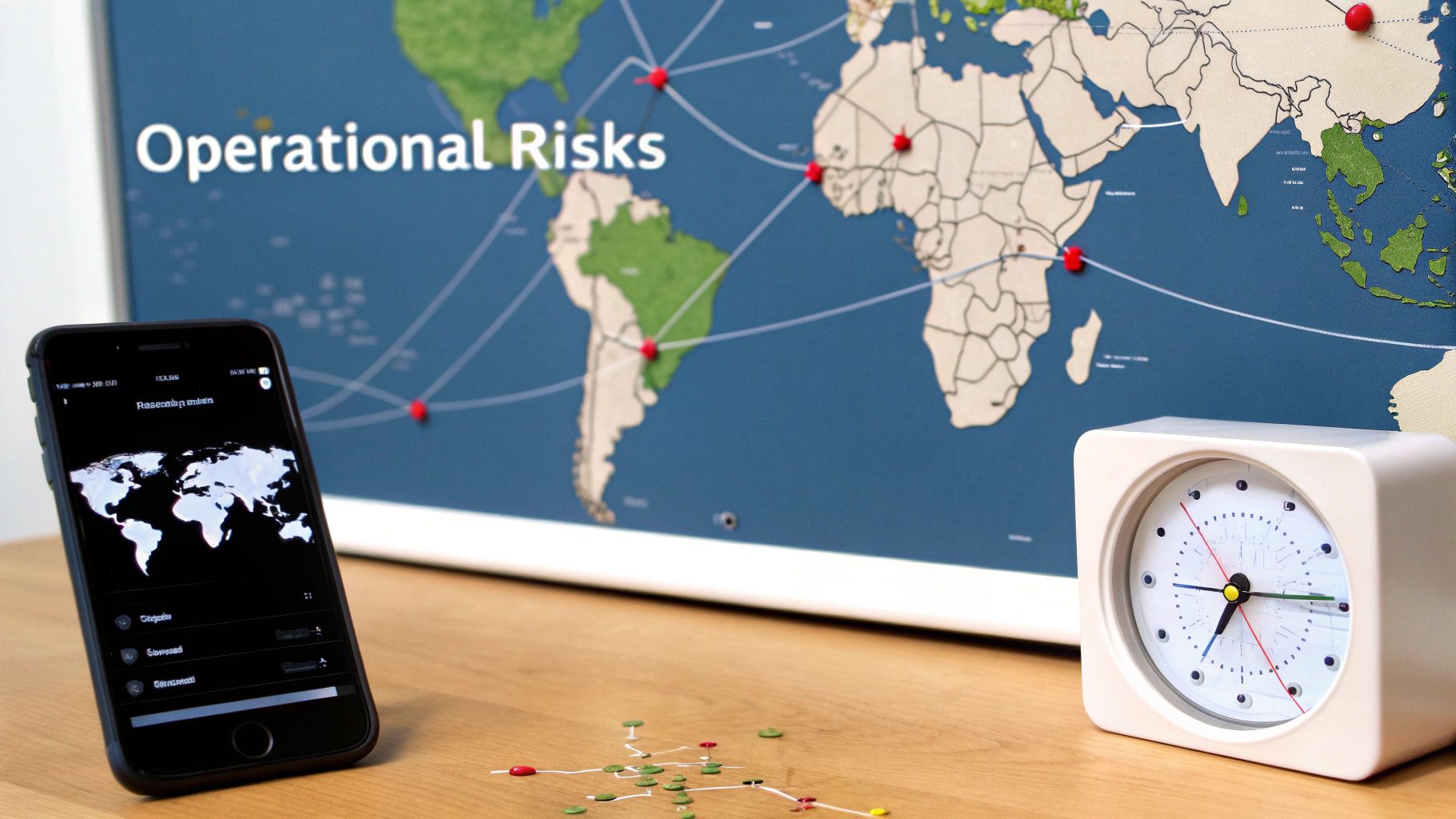
Managing global crew logistics is a high-wire act. Every day, coordinators balance a dizzying number of variables where one small slip can set off a chain reaction of operational failures. This is so much more than just scheduling; it's about mastering a complex, unpredictable environment where outside forces can instantly derail even the most meticulous plans. The pressure is on, because the consequences—grounded aircraft, regulatory breaches, and exhausted crews—are very real and immediate.
Think about a crew scheduled for a New York to London flight. On paper, it’s simple. But then a freak snowstorm in Chicago delays a connecting flight for the captain. That one event creates a domino effect. The London departure is now in jeopardy, potentially impacting dozens of other crew members and hundreds of passengers down the line. This is the daily reality of crew logistics, where a simple plan can explode into a multi-layered problem demanding a solution right now.
The Tyranny of Time Zones and Regulations
One of the most relentless challenges is coordinating crew movements across multiple, conflicting time zones. A logistics team based in Houston might be arranging a crew's hotel check-in in Dubai, ground transport in Singapore, and a flight departure from Sydney—all at the same time. This demands a true 24/7 operational mindset because in global aviation, there’s simply no “off” switch. A standard request during U.S. business hours could be for an urgent, middle-of-the-night need on the other side of the world.
Then you layer on the dense web of international regulations. Aviation authorities like the Federal Aviation Administration (FAA) in the U.S. and the European Union Aviation Safety Agency (EASA) have ironclad rules on crew duty times and mandatory rest periods. These aren’t guidelines; they are non-negotiable safety requirements designed to prevent crew fatigue.
A violation isn't just a scheduling mistake; it's a serious compliance breach. It can lead to massive fines, operational sanctions, and—most critically—it can compromise the safety of the entire flight.
This is why logistics coordinators must be experts in these ever-changing regulations, ensuring every single itinerary is fully compliant.
The sheer complexity of these operations has fueled major investment in technology. The global crew management systems market, valued at around $2.6 billion in 2022, is expected to hit $3.3 billion by 2025, growing at a rate of 9.5% annually. This growth underscores the industry's desperate need for better tools to manage these details. You can get more insights on this market's growth and its link to aviation safety from PR Newswire.
The table below breaks down the most common hurdles crew logistics teams face and the real-world consequences they have on day-to-day operations.
Key Challenges in Global Crew Logistics and Their Impact
| Challenge Area | Specific Problem | Operational Impact |
|---|---|---|
| Time Zones | Coordinating real-time needs (e.g., transport, hotels) for crews operating on opposite schedules. | Delayed responses, missed bookings, and potential crew rest violations. |
| Regulations | Navigating complex and varied FAA/EASA rules for duty time, flight time, and rest periods. | Risk of non-compliance, leading to grounded flights, heavy fines, and safety incidents. |
| Connections | Arranging positioning flights and ground transport that are prone to delays or cancellations. | Missed duty start times, forcing last-minute crew swaps and operational disruptions. |
| Security | Ensuring crew safety and access to secure areas (airports, FBOs) in diverse global environments. | Potential safety risks for crew, and operational delays if access is not pre-approved. |
| FBO Coordination | Syncing ground transportation with a private FBO's specific, often fluid, operating hours and procedures. | Stranded crews, extended waiting times, and inefficient turnarounds. |
As you can see, each challenge introduces a significant risk that can quickly spiral, making proactive management and contingency planning absolutely essential.
Unpredictable Disruptions and Security Hurdles
Beyond the planned logistics, coordinators must always be ready for the unexpected. A volcanic ash cloud over Iceland can ground European air traffic for days. A sudden geopolitical event can close airspace without warning. These macro-level disruptions require immediate, agile contingency plans—rerouting crews through different countries and sourcing last-minute accommodations and transport on the fly.
Simply moving people across borders adds another layer of complexity. Every country has its own visa requirements, customs procedures, and entry rules. A crew member might need a specific transit visa for one stop but not another. A failure to secure the right documents means denied entry, which can completely derail a crew rotation.
Finally, security is paramount. Crew members need access to secure airport areas and private FBOs, which means their transport providers must have the right clearances and training. In certain parts of the world, you also need heightened security protocols just to get the crew safely from the tarmac to their hotel. This specialized nature of global crew logistics is what separates it from standard travel management, demanding a unique combination of precision, foresight, and resilience to keep the world flying.
Best Practices for Flawless Crew Logistics Operations
Moving past simply identifying problems and into the realm of proven, real-world solutions is what separates the best from the rest in global crew logistics. Excellence here isn’t a matter of luck. It's built on a foundation of proactive strategy, solid systems, and an obsessive attention to detail. The top operators have learned how to turn logistics from a reactive headache into a genuine strategic advantage. They do this by building a framework that anticipates problems long before they can disrupt a flight.
This entire approach rests on three pillars: ironclad standard procedures, smart technology, and a global network of partners you’d trust with your own family. By getting these right, you create an operational environment that's not just efficient but remarkably resilient. You're protecting your crew, staying compliant, and ultimately, keeping your flight schedule intact. The goal is to build a system so dependable that perfect execution becomes business as usual.
Develop Ironclad Standard Operating Procedures
The bedrock of any top-tier logistics operation is a set of clear, comprehensive Standard Operating Procedures (SOPs). Think of these less as guidelines and more as the definitive playbook for your team. They bring consistency, slash human error, and give people the confidence to make the right call, even under extreme pressure. A great SOP doesn't leave anything to chance, covering every single step of moving a crew from point A to point B.
Effective SOPs should break down critical tasks into a clear, step-by-step process:
- Pre-Travel Verification: A simple but non-negotiable checklist to confirm every travel document, visa, and clearance is locked in well before anyone heads to the airport.
- Booking Protocols: Crystal-clear rules for choosing hotels and ground transport that meet both your safety standards and contractual obligations. No gray areas.
- Communication Escalation: A defined chain of command for reporting delays, incidents, or curveballs. This ensures the right information gets to the right person, right now.
- Post-Trip Debriefs: A formal process for gathering feedback from crew on their experience with transport and hotels. This is how you find weak spots and continuously improve.
An SOP is what stands between an organized response and total operational chaos. When a flight unexpectedly diverts at 3 AM, your team shouldn't be scrambling to invent a plan; they should be executing one that's already been tested and approved. That predictability is how you maintain control when everything feels unpredictable.
Build a Vetted Global Partner Network
You simply can't deliver global consistency without having trusted experts on the ground. A world-class logistics provider doesn't just Google a car service in a new city. They build and maintain a network of deeply vetted, long-term partners. This network of ground transportation companies and hotels essentially becomes an extension of your own team, holding themselves to the same exacting standards of safety, reliability, and professionalism you do.
The vetting process has to be intense. It’s so much more than just checking a business license. It means verifying insurance coverage down to the fine print, physically inspecting vehicle fleets, reviewing chauffeur training manuals, and confirming they follow crew-specific security protocols. This is how you guarantee that a crew gets the same top-notch service in Tokyo as they do in New York. You can get a closer look at how specialized airline crew transportation providers build these networks to ensure that level of quality.
This focus on specialization is what really makes a difference. The aviation and aerospace logistics industry has stayed strong by zeroing in on these niche requirements. You have companies that have built their entire reputation over decades just by mastering the complex travel needs of flight crews for major cargo and fractional ownership airlines. That kind of singular focus brings a level of expertise you won't find anywhere else.
Implement Fatigue Risk Management Systems
At the end of the day, the number one job of global crew logistics is to make sure crews are fit for duty. A Fatigue Risk Management System (FRMS) is a modern, data-driven way to stay ahead of crew fatigue, going way beyond just checking regulatory boxes. It uses the science of sleep and circadian rhythms to help schedulers make smarter, safer decisions.
A solid FRMS includes:
- Predictive Modeling: Using software to scan schedules and flag potential fatigue hot spots before they ever become a real problem.
- Proactive Interventions: Making smart adjustments, like adding an extra rest period or booking a hotel closer to the airport to shave off travel time after a grueling flight.
- Crew Feedback Loops: Creating confidential channels for crews to report fatigue-related issues without any fear of penalty.
When you put crew welfare at the very heart of your logistics, you're not just making things safer. You're also boosting operational performance and keeping your valuable crew members happy. For any modern aviation operator, this proactive approach to managing fatigue is no longer a "nice-to-have"—it's an absolute must.
Building a Resilient Logistics Workflow from Planning to Takeoff
Getting a flight crew from point A to point B isn't just a single event; it's a carefully orchestrated process. The best global crew logistics operations run on a structured workflow that anticipates problems and builds in resilience from the very start. It’s a journey that turns a long list of complex requirements into a seamless, on-the-ground reality, ensuring crews arrive rested and ready for duty.
Mapping this out shows just how proactive planning and real-time management have to work together. The process starts long before a crew member even packs their bag and only truly ends once they are safely checked in and resting.
Phase 1: Planning and Booking
This is where the foundation for the entire operation is laid. It’s all about securing every piece of the travel puzzle while staying firmly within regulatory and contractual lines. The goal here is to lock in a compliant, reliable itinerary from day one.
Key actions in this phase include:
- Sourcing Compliant Flights: Booking positioning flights that line up perfectly with crew duty start times and mandatory rest periods.
- Securing Approved Lodging: Reserving rooms at vetted hotels that are known for being safe, quiet, and close to the airport or FBO.
- Arranging Ground Transport: Scheduling pickups and drop-offs with trusted transportation partners who get the unique demands of aviation. You can dive deeper into the nuances of this step in our guide to what is ground transportation.
Getting these core elements right from the jump prevents the vast majority of problems that could pop up later on. It’s all about meticulous, proactive coordination.
Phase 2: Pre-Departure Monitoring
As travel day gets closer, the focus shifts from planning to active monitoring. This is where the logistics team double- and triple-checks every detail, getting ready for the live movement. Think of it as a final systems check to catch any last-minute snags before they can cause a real disruption.
The team will re-confirm hotel reservations 24-48 hours in advance and verify the chauffeur’s details and exact pickup times. They also start keeping a close eye on external factors like weather forecasts and airport status—anything that could impact the journey.
Phase 3: In-Transit Live Tracking
Once the crew is on the move, the operation enters its most dynamic phase. This isn't about planning anymore; it's about real-time execution, communication, and problem-solving. The operations team effectively becomes a central command center, tracking every leg of the journey.
Top-tier global crew logistics providers use technology to maintain constant visibility. This means live-tracking both the crew’s flight and their ground vehicle. If a flight gets delayed, the team can proactively adjust the ground transport schedule, often before the crew has even landed. This constant loop of communication ensures everyone—the crew, the chauffeur, and the ops team—is perfectly in sync.
The in-transit phase is the ultimate test of a logistics system. A resilient workflow isn’t one where nothing goes wrong; it’s one where the response to a disruption is so swift and seamless that the crew barely notices it happened.
This infographic breaks down the core principles that hold up a successful workflow.
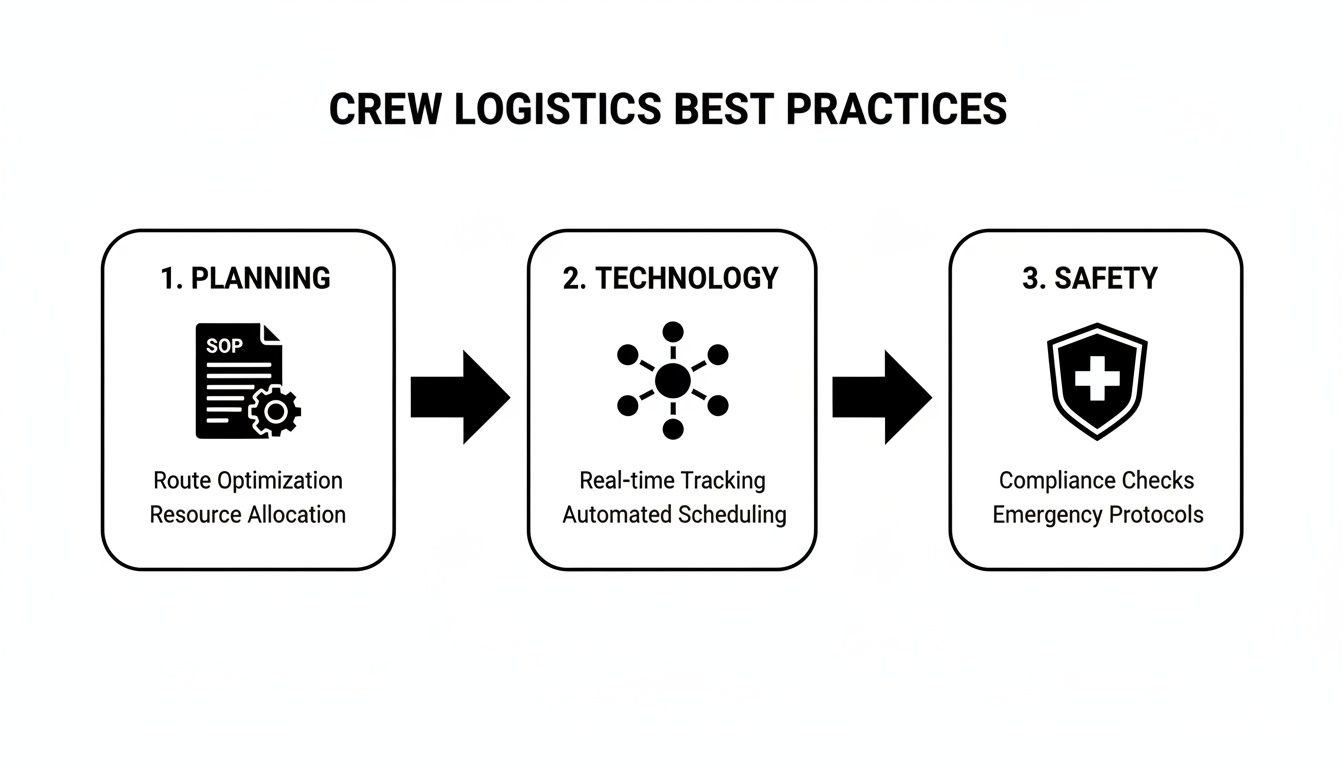
This flow shows how robust planning, integrated technology, and a non-negotiable commitment to safety are the real pillars of a dependable crew logistics operation.
Phase 4: Arrival and Rest
The final leg is all about ensuring a smooth handover and confirming the crew has arrived safely. The job isn’t done when the car pulls up to the hotel. It’s done when the crew has their room key in hand and can finally start their mandatory rest period.
This involves confirming the check-in was successful and that the room meets the required standards. It also means scheduling the return transport for their next duty period. This last step closes the loop on the current movement while kicking off the planning for the next one, showing just how continuous the cycle of crew logistics really is.
To put it in perspective, think about the difference between a major airline crew rotation in Dubai and repositioning a private jet crew to a remote FBO. The first requires navigating a massive, busy hub with precision timing for a large group. The second demands flexibility and tight coordination with a location that might not even have standard operating hours. The core four-phase process is the same, but the challenges at each stage adapt to the mission.
Contingency Planning for When Things Go Wrong
In global crew logistics, things go wrong. It's not a matter of if, but when. Mechanical failures, pop-up storms, and sudden political turmoil don't care about your perfectly crafted itinerary. The real test of any world-class logistics operation isn't its ability to dodge every bullet, but how quickly it can recover when one inevitably hits.
Trying to solve problems as they happen is a losing game. That reactive approach leads to grounded planes, missed connections, and crews left stranded in unfamiliar cities. The only way to win is to have a playbook ready to go—a robust set of contingency plans you can deploy at a moment's notice.
This is all about turning "what if?" into a concrete plan of action: "When this happens, we do this."
Identifying Common Failure Points
The first step is figuring out where the tripwires are. While it's fun to imagine planning for a volcanic eruption, the reality is that flight cancellations and crew sickness are the daily headaches. A solid plan prioritizes the probable over the merely possible.
Here are the usual suspects in global crew logistics:
- Commercial Flight Delays and Cancellations: This is the most common disruptor, creating an immediate domino effect on crew duty and rest schedules.
- Sudden Crew Sickness or Unavailability: One pilot or flight attendant calling in sick can ground an entire flight if a replacement isn't on deck.
- Ground Transportation Glitches: A simple car breakdown, a surprise traffic jam, or a chauffeur who’s a no-show can create a critical delay.
- Geopolitical and Security Events: Think sudden border closures, civil unrest, or last-minute visa changes that can trap crews or make a route impassable.
- Hotel and Accommodation Snafus: Overbookings, unsafe conditions, or other problems at a hotel can jeopardize mandatory crew rest.
By sorting these risks into buckets, you can build specific, tailored responses for each scenario. That way, your team is never caught flat-footed.
Building an Actionable Response Protocol
A response protocol isn't just a vague idea; it's a step-by-step checklist that gives your operations team the confidence to act decisively. What’s the plan for a missed connection? It can't be a frantic, last-minute search for new flights.
A world-class logistics strategy is defined by its pre-approved backup plans. It means having alternative flights already identified, trusted transport partners on standby, and a 24/7 operations team empowered to re-book instantly without waiting for layers of approval.
This level of readiness is what separates the pros from the amateurs, especially when you look at the wider logistics industry. The global logistics market is on track to hit a massive $8.1 trillion by 2030, yet the workforce is facing significant challenges. Major freight companies have been cutting jobs and hiring has slowed, making operational efficiency more critical than ever. You can find additional details on supply chain dynamics from UPS to see how these trends are shaping the landscape. This contrast underscores why strategic planning is so vital for specialized providers.
The Role of a 24/7 Operations Center
A contingency plan is useless without a team to execute it. This is why a 24/7/365 operations center is the absolute, non-negotiable heart of any serious global crew logistics provider. This team is the central nervous system, tracking every move in real-time and acting as the first line of defense when things go sideways.
They have the authority to make critical decisions on the fly, such as:
- Instant Re-booking: Immediately locking in new flights or ground transport using pre-approved vendors and payment methods.
- Proactive Communication: Sending clear, concise updates to the crew, the airline, and anyone else who needs to know.
- Deploying Backup Resources: Activating a standby car service or securing rooms at an approved secondary hotel.
At the end of the day, a contingency plan is a promise. It’s a promise to the crew that their safety and well-being are protected, and it’s a promise to the airline that its operation will hold up under pressure. It's this deep-seated commitment to preparedness that ensures a minor hiccup stays minor, instead of spiraling into a full-blown, costly crisis.
How to Choose the Right Global Crew Logistics Partner
Picking a partner to handle your global crew logistics is one of the biggest calls an aviation operator will make. This isn't just about handing off a task; you're trusting a critical piece of your operation's integrity to an outside team. The right provider becomes a seamless extension of your own flight department. The wrong one can quickly become a source of delays, added costs, and major headaches.
Don't just shop on price. A true partner invests in your success, bringing the kind of resilience and deep-seated expertise that keeps your schedule and your crew safe. Think of it as a strategic investment in operational reliability.
The Non-Negotiables: Core Service Requirements
When you're vetting potential partners, some things are simply table stakes. These are the absolute must-haves that separate a real logistics specialist from a standard vendor. Without them, you’re just inviting risk into your operation.
Make sure they can check these boxes:
- 24/7/365 Live Operations: Flight ops don't clock out at 5 PM, and neither should your logistics team. You need a dedicated, around-the-clock operations center staffed by real people—not an after-hours answering service—ready to solve problems the moment they happen.
- A Deeply Vetted Global Network: A provider is only as good as their people on the ground. They need a trusted network of ground transport and hotel partners in all your key locations. "Vetted" means they've done the homework: confirmed insurance, run safety audits, and built solid, long-term relationships.
- Proven Aviation Experience: This is a niche world. Your partner absolutely must understand the ins and outs of FAA and EASA regulations, FBO procedures, and the specific challenges that come with moving flight crews. This isn't a job for a generic car service.
Choosing a partner is fundamentally an exercise in risk management. You are looking for a team that has already anticipated the dozens of things that can go wrong and has built the systems and relationships to solve them before they impact your mission.
Vendor vs. Partner: Asking the Right Questions
Once you’ve confirmed they have the basics covered, it's time to go deeper. A vendor just follows orders. A partner works with you to make your entire operation run smoother. That's the difference you're looking for.
Here are the kinds of questions that will reveal whether you’re talking to a true partner:
- How do you handle privacy for high-profile clients? Discretion is everything in this business. A top-tier partner will have rock-solid privacy protocols and NDAs in place with their entire team and all their affiliates. Your information must be protected.
- What technology do you use for real-time tracking and communication? They should be able to give you live visibility into where your crew’s vehicle is and an instant line of communication with their dispatch team. No one should ever be left in the dark.
- Can you provide a diverse, high-quality vehicle fleet? Whether it's an executive sedan for the captain or a luxury sprinter van for a full crew, a quality provider needs a fleet of well-maintained vehicles ready for any mission.
At the end of the day, finding the right partner for global crew logistics comes down to finding a team whose obsession with safety, reliability, and precision mirrors your own. As you weigh your options, seeing how a dedicated global transportation service operates can provide a valuable benchmark for what to expect. This is the investment that ensures your crew is always rested, ready, and exactly where they need to be, every single time.
Common Questions, Answered
Even with the best planning, a few questions always pop up when we talk about global crew logistics. Let's tackle some of the most common ones to clear things up.
How is Crew Logistics Different From Regular Corporate Travel?
It’s a world of difference. Think of it this way: corporate travel is about getting one person to a meeting on time. Crew logistics is about making sure an entire flight operation, often worth millions of dollars, can even happen.
A single delay in getting a crew member to the FBO can ground an aircraft. This is a high-stakes, mission-critical puzzle governed by strict international laws on crew rest, duty times, and fatigue. Regular business travel simply doesn't have that kind of operational pressure or regulatory complexity.
What Role Does Technology Really Play?
Technology has completely changed the game. It’s moved us from scrambling to react to problems to proactively preventing them before they start. We now have real-time flight and vehicle tracking, automated alerts for any disruption, and communication platforms that keep crews, dispatch, and drivers all on the same page.
A pilot can get an instant itinerary update on their phone, while scheduling software automatically flags any potential violation of mandatory rest periods. This level of integration cuts down on human error and turns chaotic situations into manageable ones.
Why Is a Vetted Global Partner Network So Important?
Aviation doesn't stop at a country's borders, and neither can crew support. You need reliable, safe ground transportation and lodging everywhere, from major international hubs to remote airfields. A vetted global network is your guarantee of quality.
It means your logistics provider has already done the hard work—checking the insurance, safety records, and professionalism of local car services and hotels. This removes the enormous risk of trying to find a trustworthy vendor in an unfamiliar city at 2 AM. When you have a network you can count on, you know your crew’s safety and well-being are always in good hands.
Ensure every leg of your crew's journey is seamless and secure. For premium, reliable ground transportation solutions worldwide, partner with MLR Worldwide Service. Discover our specialized crew transportation services today.